

Dear Investor.
Zee here. In the ever-evolving landscape of global technology, few companies command the scale, influence, and diversification of Tencent Holdings. While American tech giants like Apple, Microsoft, and Google typically dominate headlines in Western markets, there’s a Chinese powerhouse that has quietly built one of the most formidable digital empires on the planet and right now, it’s at a particularly interesting inflection point.
This isn’t just another tech company riding the AI wave or chasing the latest trend. This is a business that touches the daily lives of over a billion people, dominates multiple industries simultaneously, and continues to generate cash flows that would make most Fortune 500 companies envious.
As the world’s largest video game company by revenue and one of the most valuable tech enterprises globally, Tencent has been making significant waves lately and for good reason.
From regulatory tailwinds in China to impressive earnings beats, from strategic investments that continue to pay dividends to its evolution beyond gaming into AI, fintech, and cloud services, there’s a compelling story unfolding here.
Let’s dive into what makes Tencent such a fascinating investment case in today’s market.
Announcement:
Join us on Wednesday 8th April 2026, for our live Free webinar “The Hidden Giant in Grab’s Business That Most Investors Overlook (Not Ride-Hailing)”.
👉🏼 Click here to reserve a spot. (LINK)
The Tencent Story: From Messaging App to Tech Empire
The Humble Beginnings (1998-2004)
Tencent was founded in November 1998 in Shenzhen by Pony Ma (Ma Huateng) and four colleagues during China’s early internet boom. Their first product, originally called OICQ (later renamed QQ after a trademark dispute with AOL), was a simple instant messaging service modeled after the international ICQ platform.
Here’s the thing: Tencent wasn’t profitable for its first three years. The company struggled to monetize its free messaging service even as users flooded in—hitting 1 million users in the first year and 50 million by the second year. The breakthrough came when they introduced QQ Coin, a virtual currency that let users buy avatar customizations and special features. Suddenly, Chinese internet users were paying to make their digital identities stand out. This “freemium” model became Tencent’s foundation.
In 2004, Tencent went public on the Hong Kong Stock Exchange, raising about $200 million.
The Gaming Revolution (2004-2011)
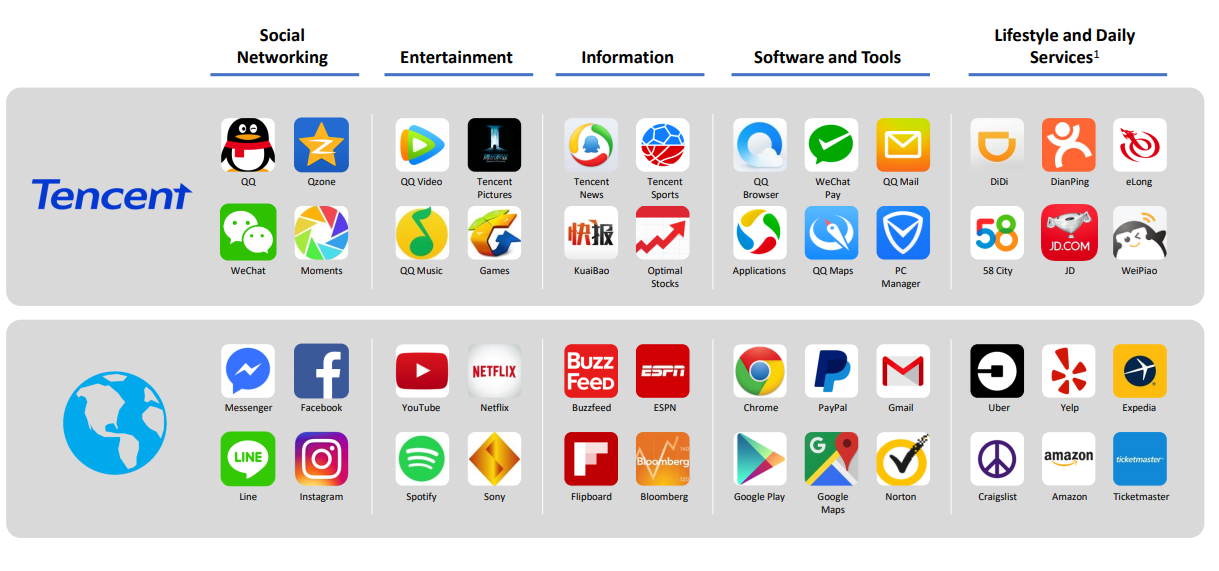
In 2004, Tencent entered online gaming—a move that would transform the company. They started by licensing games from Korean developers like “CrossFire” and “Dungeon Fighter Online,” which became massive hits in China. Over time, Tencent began making its own games and acquiring game studios globally. Today, Tencent owns or has major stakes in Riot Games (League of Legends), Supercell (Clash of Clans), Epic Games (Fortnite), and many others. It’s now the world’s largest video game company by revenue.
The WeChat Era (2011-Present)
In 2011, Tencent launched Weixin (branded internationally as WeChat), and this changed everything. What started as a mobile messaging app evolved into what’s known as a “super app”—combining messaging, social media, mobile payments, mini-programs, and more. Think of it as if Facebook, WhatsApp, Venmo, and App Store all lived in one application.
WeChat now has over 1.3 billion monthly active users, primarily in China. It’s embedded in daily life—people use it to chat, pay bills, order food, book taxis, invest money, and even access government services. WeChat Pay has become one of China’s dominant mobile payment platforms, competing directly with Alibaba’s Alipay.
The Investment Powerhouse (2010s-Present)
Tencent didn’t just build its own products—it invested strategically in promising companies worldwide. The company holds stakes in Spotify, Tesla, Reddit, Discord, Snap, and hundreds of other firms. In 2001, South African media company Naspers bought a 46.5% stake in Tencent for $32 million—an investment that grew to be worth over $100 billion at its peak, making it one of the best venture investments in history.
Today’s Tencent
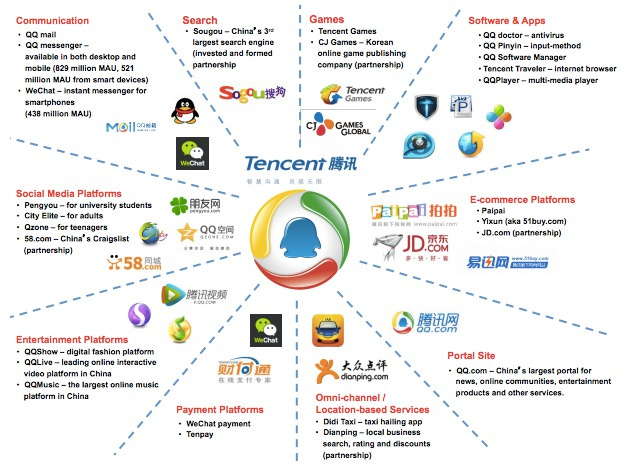
Tencent is now a diversified technology conglomerate with six main business segments: value-added services (gaming and social), online advertising, FinTech and business services, cloud computing, and various technology initiatives including AI and quantum computing. With a market cap of approximately $750 billion, it’s one of the most valuable companies in the world.
The 5 Latest Developments
1. AI Chip Access Opens New Doors
In a significant development last month, Chinese regulators approved Tencent to prepare purchase orders for Nvidia’s advanced H200 AI chips. This is a big deal. For months, uncertainty around access to cutting-edge semiconductors had been hanging over Chinese tech companies.
Now Tencent can move forward with its AI infrastructure plans, which should help the company compete in artificial intelligence and cloud services. The company has been ramping up AI spending significantly, capital expenditures jumped 67% year-over-year in recent quarters to fund GPUs and servers.
2. Middle East Expansion in Full Swing
Tencent is actively expanding its cloud computing footprint in the Middle East, with data centers already operational in Saudi Arabia and more planned across the region. The company sees major opportunity here, as IT spending in the Middle East and North Africa is projected to reach $155 billion in 2025.
Tencent is leveraging its existing Chinese customer base (like food delivery app Keeta and gaming companies) to establish a presence, putting it in direct competition with Amazon, Microsoft, and Google.
3. Strong Financial Performance Continues
The numbers tell a compelling story. In Q3 2025, Tencent reported total revenue of RMB 193 billion, up 15% year-on-year, with net profit attributable to shareholders rising 19%.
The company is firing on multiple cylinders, domestic gaming revenue grew 16%, international gaming surged 43%, and marketing services (advertising) continued robust growth thanks to AI-driven improvements.
The stock is currently trading around $78, though it’s worth noting it hit a 52-week high of $87.67 back in October 2025.
4. Gaming Still Dominates, But Diversity Grows
While gaming remains the core business, Tencent is successfully diversifying. Games like “Honor of Kings” and new hit “Delta Force” are performing exceptionally well, but the company is also seeing accelerating growth in business services, particularly AI-related offerings like GPU rental and API usage for enterprise customers.
This diversification helps reduce dependence on any single revenue stream.
5. Going Global with Payments
Tencent is pushing hard to make its payment systems work internationally. They launched TenPay Global Checkout, allowing some Weixin merchants to accept funding from outside mainland China . They’ve also partnered with more than 40 wallets in over 10 countries and regions, opening access to tens of millions of merchants in China for international travelers.
This matters because it positions Tencent as more than just a domestic Chinese company.
They’re building the infrastructure to be a global payments player.
Bottomline
Tencent offers exposure to multiple high-growth areas: gaming, social media, cloud computing, AI, and digital payments. The company benefits from China’s massive domestic market while expanding internationally through investments and acquisitions.
However, investors should be aware of the risks. Chinese regulatory oversight remains a factor, authorities have been more assertive about controlling tech companies in recent years. Geopolitical tensions between the U.S. and China could impact international expansion.
And while the recent approval for AI chips is positive, access to cutting-edge technology isn’t guaranteed long-term.
Disclaimer: All information here is for educational purposes only. This is not financial advice. Please do your own research and speak with a licensed advisor before making any investment decisions. Past performance is not indicative of future returns. How we invest may not suit your investment goals and risk management profile.