

Dear Investor.
Zee here. Picture this: You’re scanning through stocks and spot a company paying a 12% dividend yield. Your friend’s “safe” index fund only returns 8% annually. This looks like easy money, right?
Not so fast.
That high yield might be a warning siren, not a gold mine.
What Is the Dividend Trap?
The dividend trap happens when investors chase high dividend yields without looking at the company’s financial health. Here’s the painful reality: you might earn a 10% dividend, but if the stock price drops 30% because the company is struggling, you’ve actually lost 20% of your money.
That’s not investing, that’s walking into a trap.
Why High Yields Can Signal Danger
A sky-high dividend yield often means one of two things:
The stock price has crashed because investors are selling off their shares (yield = dividend ÷ stock price, so if the price drops, the yield shoots up)
The company is paying out more than it can afford to maintain investor confidence before an inevitable dividend cut
Either way, you’re likely looking at a sinking ship, not a treasure chest.
Your 4-Point Dividend Safety Checklist
Before buying any dividend stock, run it through these essential filters. If it fails even one, walk away, there are thousands of other opportunities.
1. Check the EPS Growth Trend (The Fuel Tank)
Earnings Per Share (EPS) tells you if the company is actually making more money over time.
🚩 Red Flag: EPS has decreased in 2 out of the last 3 years
✅ Green Flag: Steady 5-10% annual EPS growth over 5 years
Why it matters: Dividends come from profits. If profits are shrinking, the dividend won’t last.
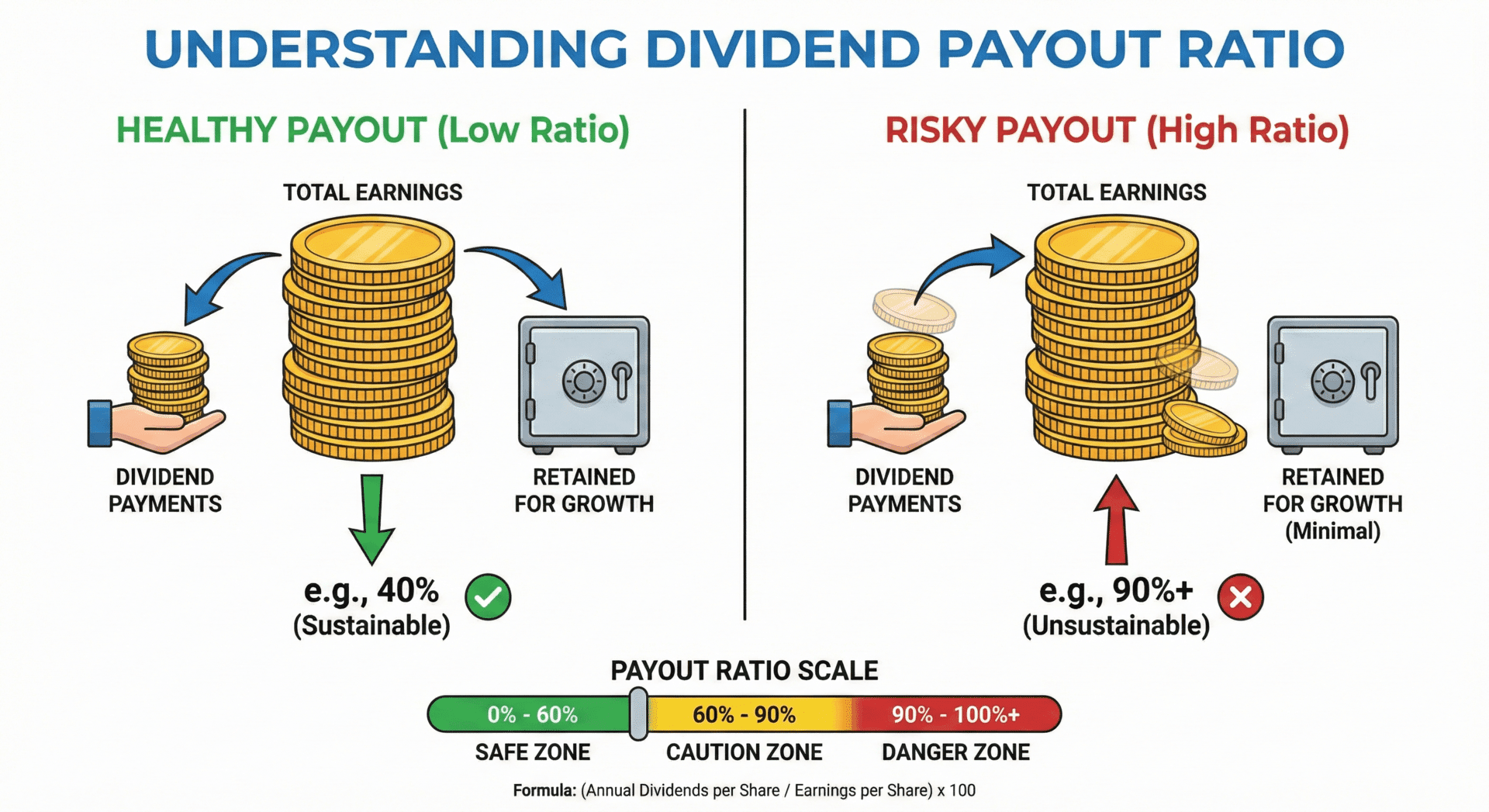
2. Examine the Payout Ratio (The Safety Valve)
This shows what percentage of earnings the company pays out as dividends.
🚩 Red Flag: Payout ratio over 70% (or over 100% for any company)
✅ Green Flag: Payout ratio between 30-60%
Why it matters: If a company pays out 100% of its earnings, it has zero cushion for emergencies or reinvestment. When trouble hits, the dividend gets cut.
3. Compare to Industry Peers (The Reality Check)
Never look at yield in isolation—compare it to similar companies in the same industry.
🚩 Red Flag: Yield is 2-3x higher than reliable competitors
✅ Green Flag: Yield slightly above average with strong financials to back it up
Why it matters: If the industry average is 4% and you found a 12% yielder, the market is screaming “danger.” You haven’t outsmarted everyone else—you’ve found a company heading for a dividend cut.
4. Assess the Debt Load (The Anchor)
Debt is the enemy of dividend investors because companies must pay lenders before shareholders.
🚩 Red Flag: High debt-to-equity ratio with rising interest costs
✅ Green Flag: Low, manageable debt with healthy cash reserves
Why it matters: When revenue drops or interest rates rise, heavily indebted companies slash dividends first to free up cash for debt payments.
The Bottom Line
The best dividend stocks are often the boring ones—companies with modest but growing yields, strong fundamentals, and sustainable payout ratios. They won’t make you rich overnight, but they’ll steadily build your wealth without the constant anxiety of dividend cuts and falling stock prices.
Remember: Your goal isn’t to find the highest yield. It’s to build a reliable income stream that grows over time.
Stop chasing yields.
Start building wealth.
Disclaimer: All information here is for educational purposes only. This is not financial advice. Please do your own research and speak with a licensed advisor before making any investment decisions. Past performance is not indicative of future returns. How we invest may not suit your investment goals and risk management profile.