

Dear Investors.
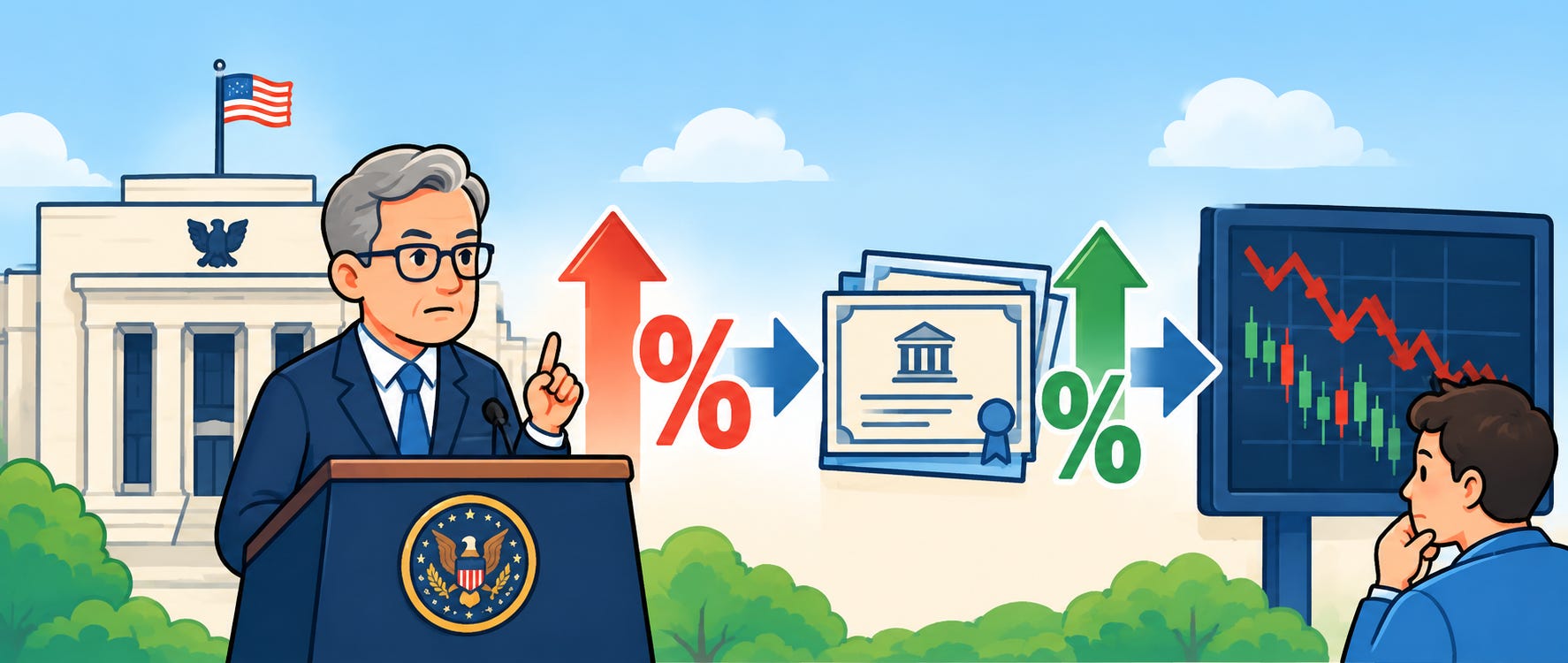
Zee here. Few headlines unsettle a new investor like this combination: the Federal Reserve raises interest rates, Treasury yields jump, and stocks fall, all in the same week.
In September 2026 that is exactly what happened, with the 10-year Treasury yield crossing 5% while the S&P 500 slid. Several students have asked what these numbers mean, whether they’re the same thing, and whether you should do anything about them.
So I decided to write a simple guide to answer these questions in plain English. You’ll learn what the Fed funds rate, the 10-year yield and the 30-year yield each measure, who controls them, how they influence one another, and why rising yields tend to put pressure on the S&P 500.
1. What’s happening right now
On September 16, 2026, the Federal Reserve raised its benchmark rate by 0.25 percentage points, to a range of 3.75%–4.00%. It was the Fed’s first increase since 2023.
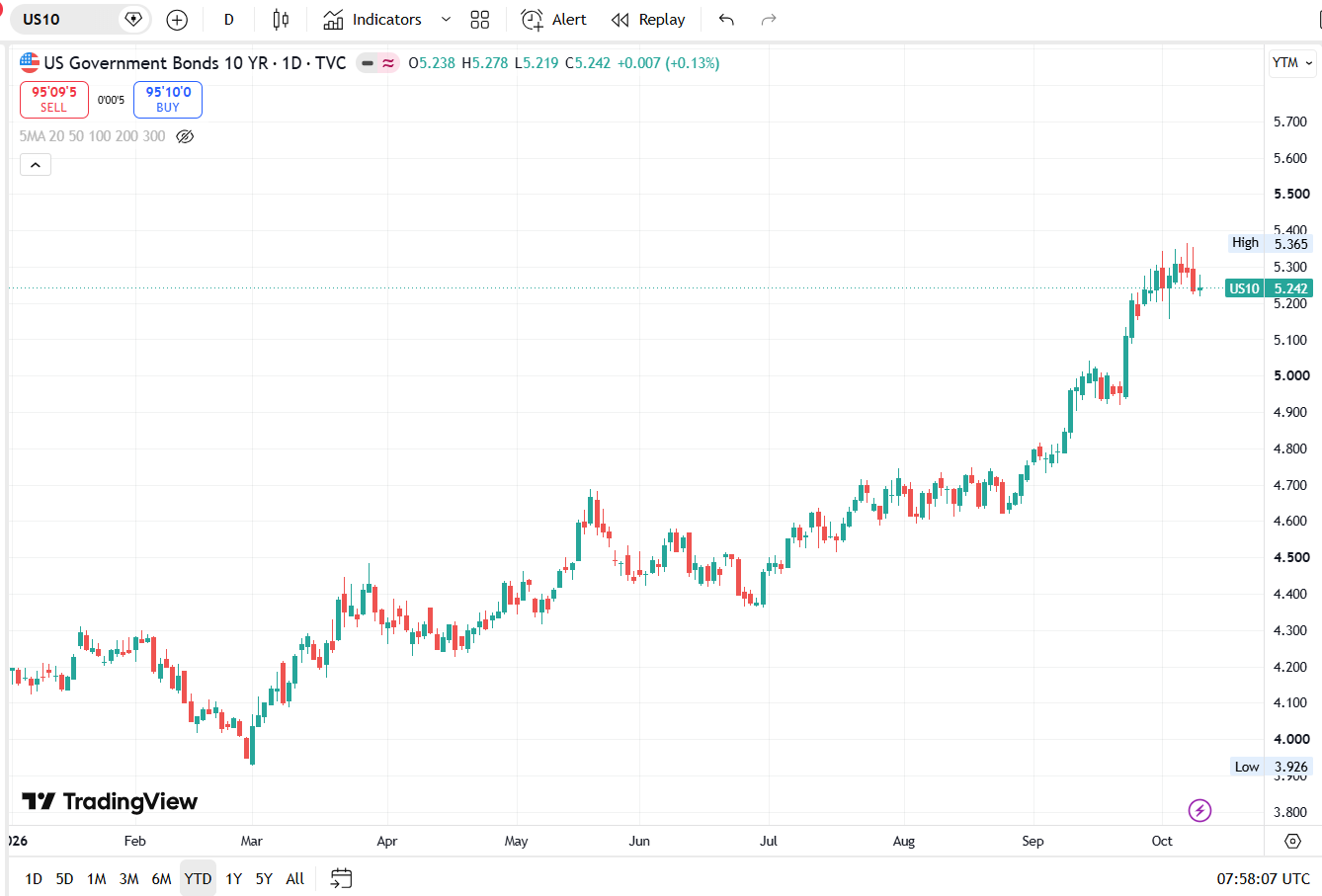
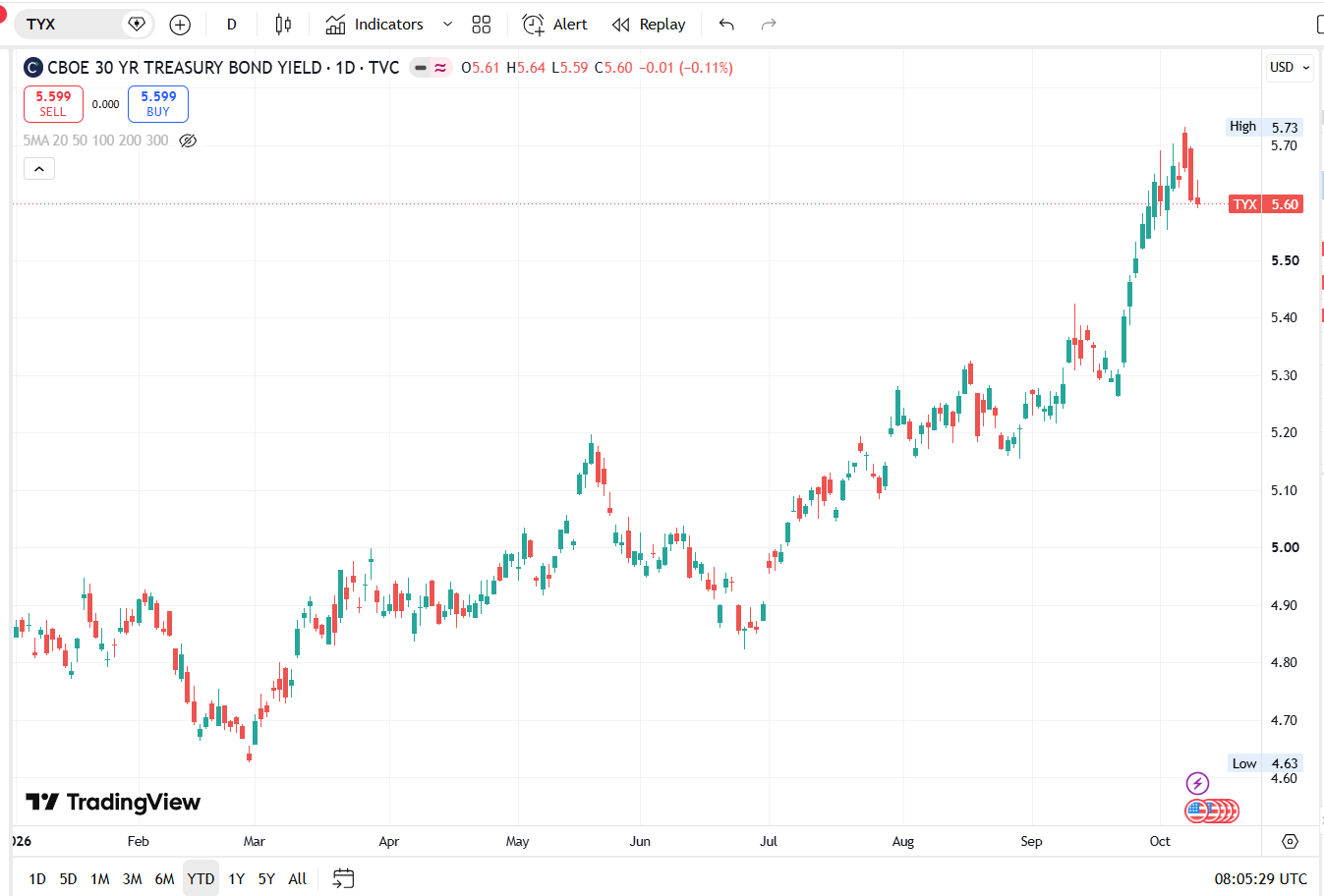
Around the same time, the 10-year Treasury yield climbed above 5%, its highest level since 2007, and the 30-year yield rose to roughly 5.4%–5.5%, a level not seen since the mid-2000s. Reports at the time linked the move to hot inflation data and higher oil prices.
2. The three players explained
The Fed funds rate is the interest rate banks charge each other for overnight loans. The Federal Reserve sets a target range for it 8x a year. It is the Fed’s main steering wheel: raise it to cool inflation, cut it to support growth and jobs. It influences credit card rates, savings account rates, and short-term business loans fairly directly.
The 10-year Treasury yield is the annual return you earn if you lend money to the US government for 10 years and hold to maturity. It is the most-watched interest rate in the world. Mortgage rates, corporate bond rates and stock valuations all take cues from it.
The 30-year Treasury yield is the same idea, but you lend for 30 years. It reflects what investors expect for inflation, growth and government borrowing over a generation.
One rule to memorize: bond prices and bond yields move in opposite directions. If investors rush to sell bonds, prices fall and yields rise.
If they rush to buy, prices rise and yields fall.
When you read “yields surged,” it means bond prices dropped.
3. The relationship between the 3
Here is the key insight that surprises most beginners: the Fed controls only the short end. It sets the overnight rate directly. The 10-year and 30-year yields are set by the market, meaning millions of buyers and sellers deciding what those bonds are worth.
The Fed still influences long yields, mainly through expectations:
If investors think the Fed will keep rates high for a long time, longer-term yields tend to rise, because they can earn more by waiting.
If investors think the Fed will cut soon (for example, because the economy is weakening), long yields tend to fall.
If the Fed seems soft on inflation, long-term investors demand extra yield as protection, and long yields can rise even if the Fed hasn’t moved.
They also respond to forces the Fed doesn’t control, including inflation expectations, oil prices, how much debt the government is issuing, and what other countries’ central banks are doing.
This is why long yields sometimes move before the Fed does. In September 2026, the bond market had effectively raised long-term rates weeks before the Fed raised the overnight rate. Think of the Fed as the thermostat in one room, and the bond market as the weather outside.
4. How Fed rate changes feed into the 10-year and 30-year yields
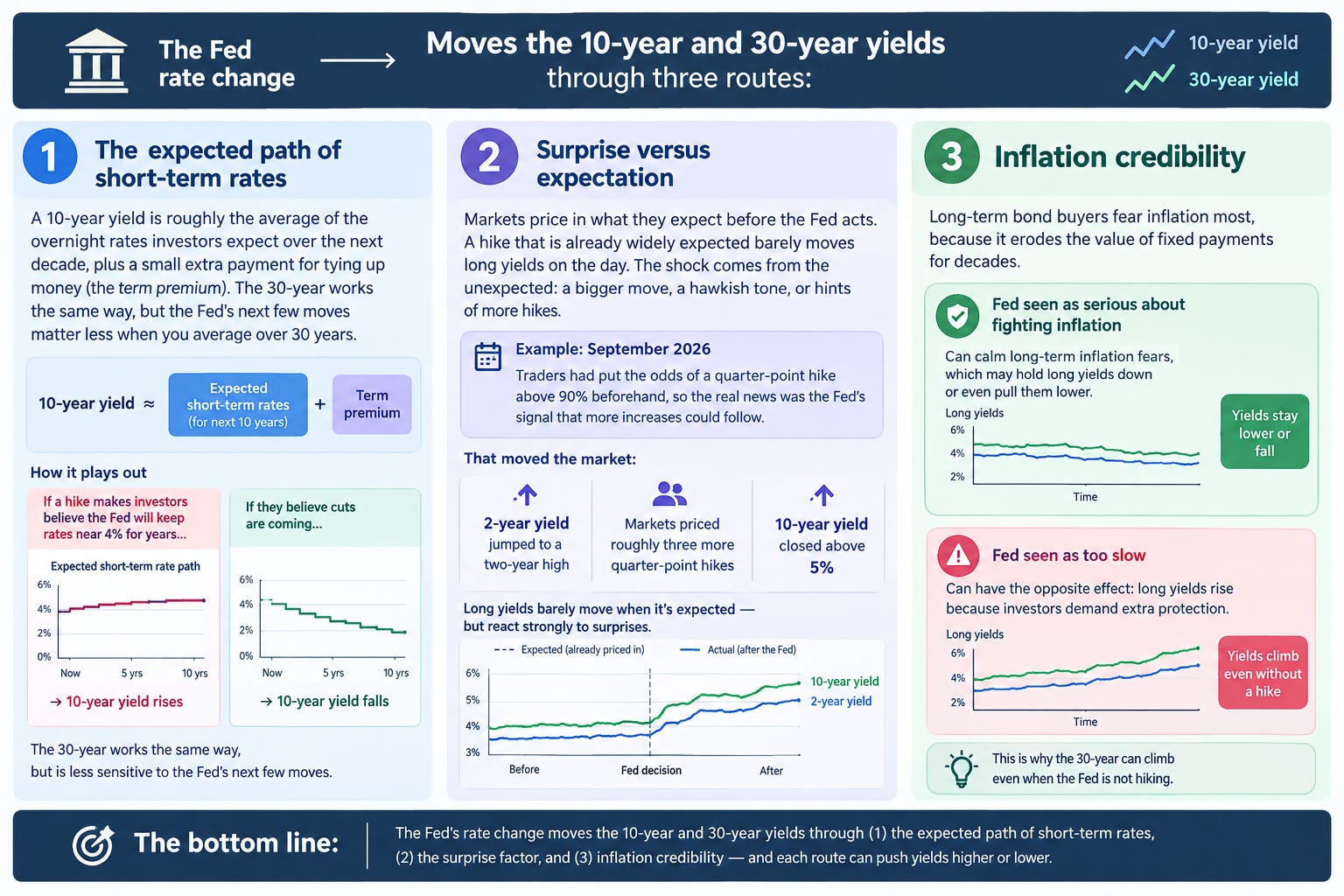
A Fed rate change moves the 10-year and 30-year yields through three routes: what it says about future short-term rates, how surprising it is, and what it signals about inflation.
Why the link is not 1-to-1
The Fed moves one rate. Long yields respond to many other forces: oil prices, government borrowing, global bond markets and growth expectations. Two examples show how loose the link can be:
September 2025: the Fed cut rates for the first time in nine months, yet the 10-year yield ended the week higher (4.07% to 4.13%), as the market focused on a slowing job market and the pace of future cuts.
Late 2024: the Fed cut rates by a full percentage point over three meetings, while the 10-year yield rose by roughly a full percentage point, as investors worried about inflation and heavy government borrowing.
Quick reference: what usually happens
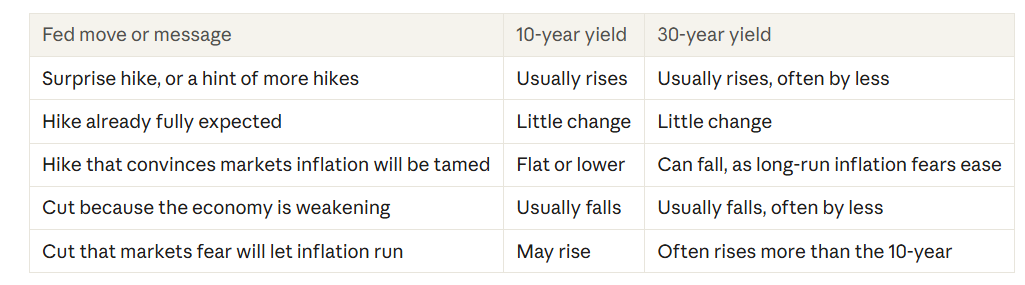
A useful pattern: when the Fed hikes, short-term yields tend to rise faster than long-term ones, so the gap between them narrows.
5. Compare and contrast
What the 10-year and 30-year have in common: both are “long-term” rates set by the market, both are considered very safe because they’re backed by the US government, and both usually move in the same direction on a given day.
How they differ: the 30-year is more sensitive to price swings. Because your money is locked up three times as long, a small change in yield causes a much bigger change in the bond’s price. That is why long-term bond funds can drop sharply when yields spike. Reports in late September 2026 noted a popular 20+ year Treasury ETF falling nearly 2% in a single day while yields jumped.
The gap between them also tells a story. Normally, longer bonds pay more than shorter ones, to reward you for waiting. When short-term yields rise faster than long-term yields, the gap narrows or flips (an “inverted” curve), which has historically been a warning sign of slowing growth.
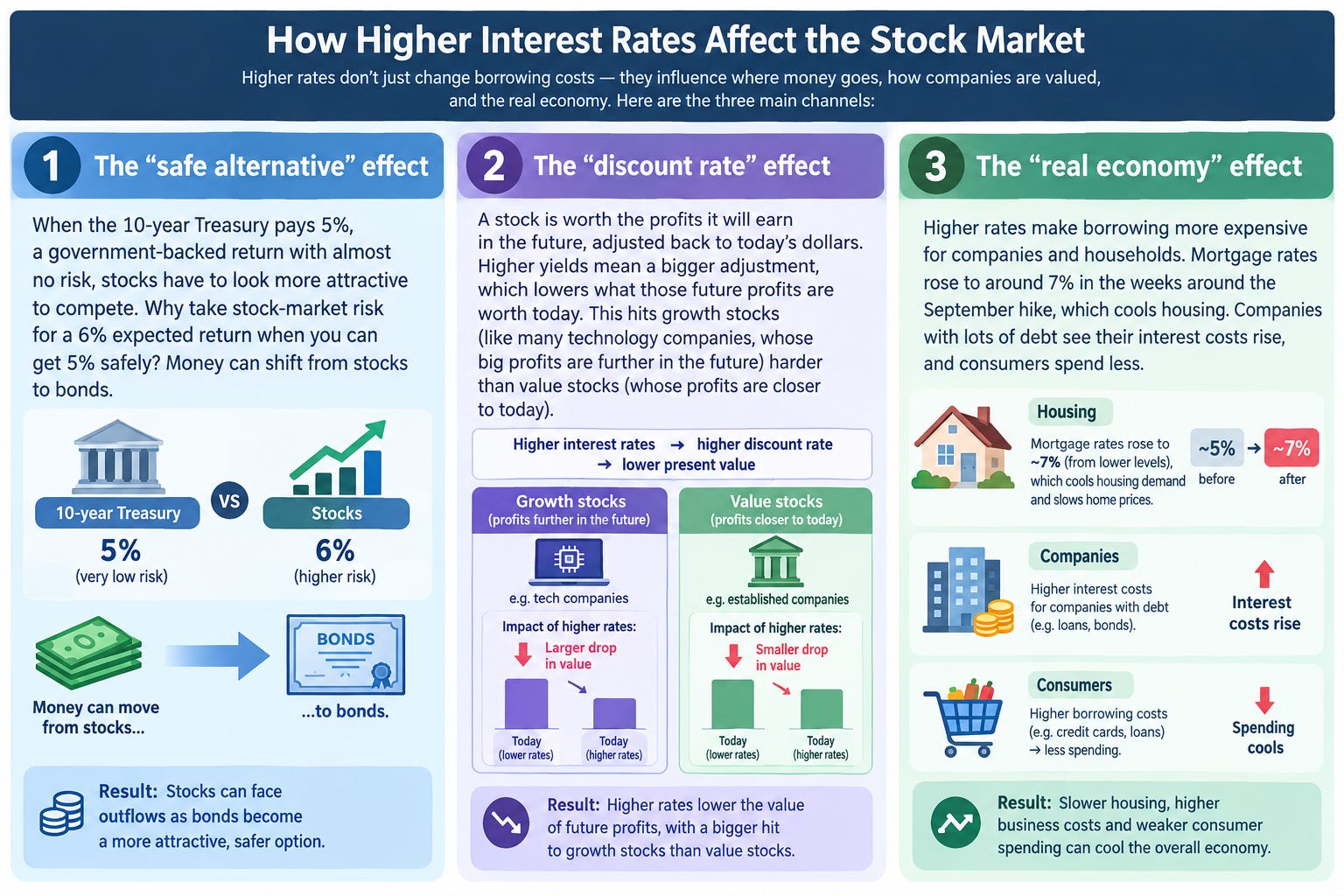
6. How rising rates and yields affect stocks
There are three main channels.
7. What this means for the S&P 500
The S&P 500 is an index of 500 of the largest US companies, so it’s a good proxy for “the US stock market.” It tends to react to rates in two phases.
The short-term reaction is often negative. Around the September 2026 hike, the S&P 500 fell to its lowest level since late July at one point, and the Dow dropped more than 600 points on decision day. Days later, stocks fell again as yields jumped further after hawkish Fed comments.
The longer-term picture is more mixed. Rising rates don’t automatically mean falling stocks. What matters is why rates are rising:
Rates rise because the economy and profits are strong. Stocks can handle this, because earnings growth offsets the higher discount rate. Analysts in late September pointed to strong expected profit growth for S&P 500 companies as a cushion.
Rates rise because of an inflation scare while growth weakens. This is the tougher combination for stocks, because profits shrink at the same time as the discount rate climbs.
Another key point: how fast and how far matters more than the first move. A small, gradual set of hikes is very different from the rapid-fire hikes of 2022. Markets were pricing in more possible hikes after the September decision, which is a big part of why investors stayed nervous.
8. Practical takeaways for investors
Don’t panic over one headline. Short-term reactions to Fed decisions are noisy and often reverse within days or weeks.
Understand what you own. If you hold long-term bond funds, a rise in yields means falling prices in the short run, though you earn higher income going forward. If you hold growth-heavy stock funds, expect more turbulence when yields rise.
Higher yields are not all bad news. New savings, CDs, money market funds and new bonds pay more, which is good for savers and for investors buying bonds today.
Match your investments to your time horizon. Money you need within a few years generally shouldn’t ride on stock-market swings, while money for decades away can usually tolerate them.
Diversify. A mix of stocks and bonds, across sectors, helps you avoid being hurt by any one rate scenario.
Watch the right signals. Pay attention to inflation reports, the Fed’s statements and projections, and where the 10-year yield is heading. A sustained climb in the 10-year yield is one of the best early warnings that stock valuations are under pressure.
The bottom line
The Fed controls the overnight rate. The market controls the 10-year and 30-year yields, with the Fed’s actions and words as one big influence among many.
When those yields rise, stocks face competition from safer bonds and a harsher valuation math, so the S&P 500 often wobbles, especially its growth-heavy parts.
But the reason for rising rates, and whether company profits keep growing, usually matter more than the rates themselves.
Disclaimer:
All information here is for educational purposes only. This is not financial advice. Please do your own research and speak with a licensed advisor before making any investment decisions. Past performance is not indicative of future returns. How we invest may not suit your investment goals and risk management profile.