

Dear Investor.
Zee here. Chances are you've used a Microsoft product today without even thinking about it: Windows on your laptop, Excel at work, maybe Xbox on the couch tonight.
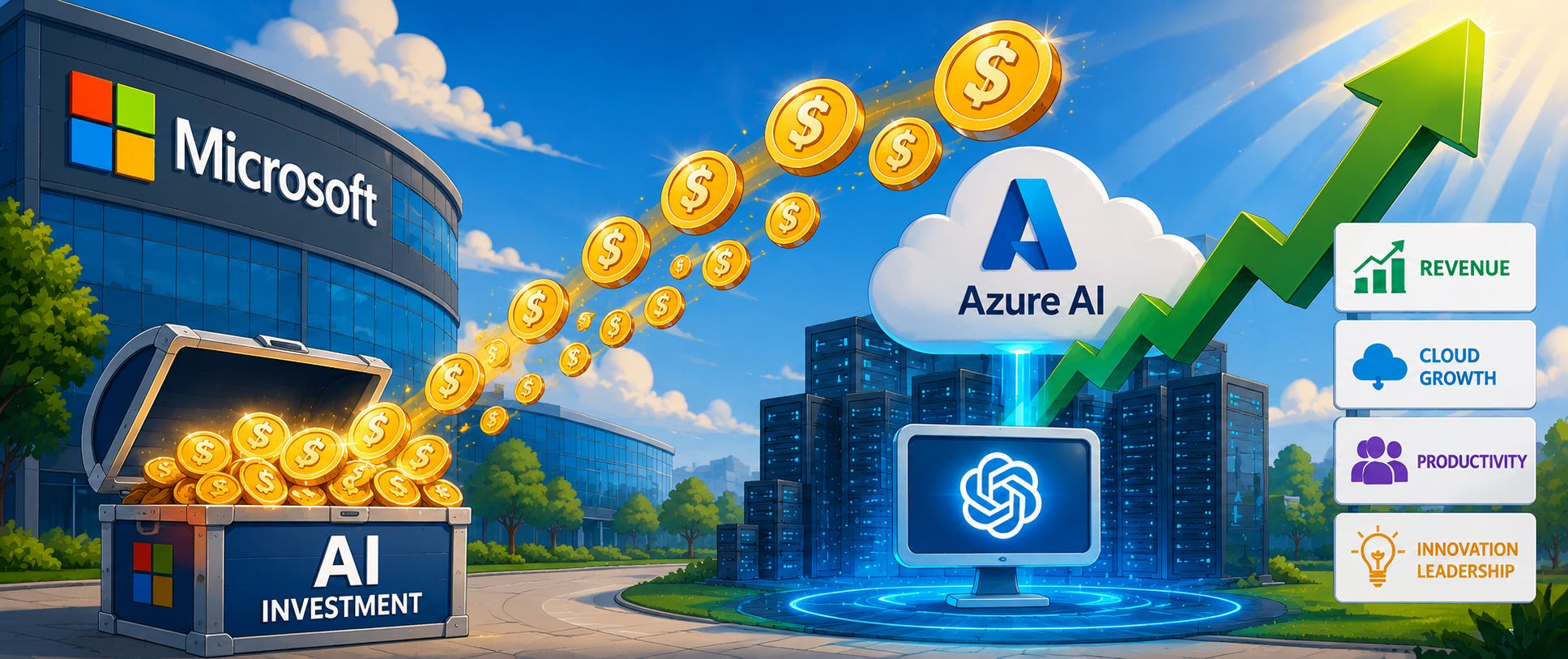
But the Microsoft sitting in your portfolio is a very different company than the one that used to just sell software in a box. Today it's one of the biggest bets in the market on whether artificial intelligence will actually pay off.
Microsoft just closed out its fiscal year with another earnings beat, a cloud business that crossed $100 billion for the first time, and a spending plan for 2027 that has some investors nervous.
What Does Microsoft Actually Do?
Microsoft now makes money in three main ways:
Productivity and Business Processes — Office, Microsoft 365, Teams, LinkedIn, and Dynamics (business software). This is the reliable, subscription-based cash cow.
Intelligent Cloud — Azure (cloud computing), enterprise services, and GitHub. This is the growth engine, and increasingly, the AI engine.
More Personal Computing — Windows, Surface devices, Xbox, and Bing/search advertising. This is the smallest and slowest-growing piece today.
The business model is simple to understand even if the technology isn’t: Microsoft sells subscriptions and cloud capacity to millions of businesses and consumers, which produces steady, recurring revenue and lately, it’s pouring an enormous amount of that cash into building AI infrastructure, betting that AI becomes the next decade’s growth driver the way cloud computing was for the last one.
With that context in mind, here are five things happening at Microsoft right now that matter for investors.
1. Earnings Keep Beating Expectations
Microsoft just closed out its fiscal 2026 with its fourth-quarter results, and once again it topped what Wall Street was expecting.
Revenue came in at $90.01 billion, up almost 18% from a year earlier, while adjusted profit per share of $4.74 beat estimates of around $4.24.
Net income rose to $35.77 billion, up from $27.23 billion a year prior. This marks roughly the fifth straight quarter of beating analyst expectations, a streak that’s helped cement Microsoft’s reputation as one of the more dependable large-cap earners in tech.
Consistent beats suggest the underlying business, subscriptions, cloud, and now AI services is executing well, even as the company spends aggressively.
2. Azure Cloud Crossed $100 Billion and Keeps Accelerating
Azure, Microsoft’s cloud computing platform, had its biggest year yet: full-year revenue topped $100 billion for the first time, growing 41%, while the most recent quarter alone saw Azure grow around 40-43%.
That makes Azure larger than Google’s cloud business, though it still trails Amazon Web Services in size.
Azure is the primary lens through which investors judge whether Microsoft’s massive AI spending is paying off. As long as Azure keeps accelerating, Wall Street tends to give Microsoft the benefit of the doubt on its spending. If that growth rate ever slows meaningfully, expect a much rougher reaction from the stock.
3. Capital Spending Is Exploding
Here’s the number causing the most debate right now: Microsoft is guiding for roughly $255–260 billion in capital expenditures for fiscal 2027, up from about $190 billion in calendar 2026, a jump of roughly 35%. This money is going toward data centers, chips, and the physical infrastructure needed to run AI workloads at scale.
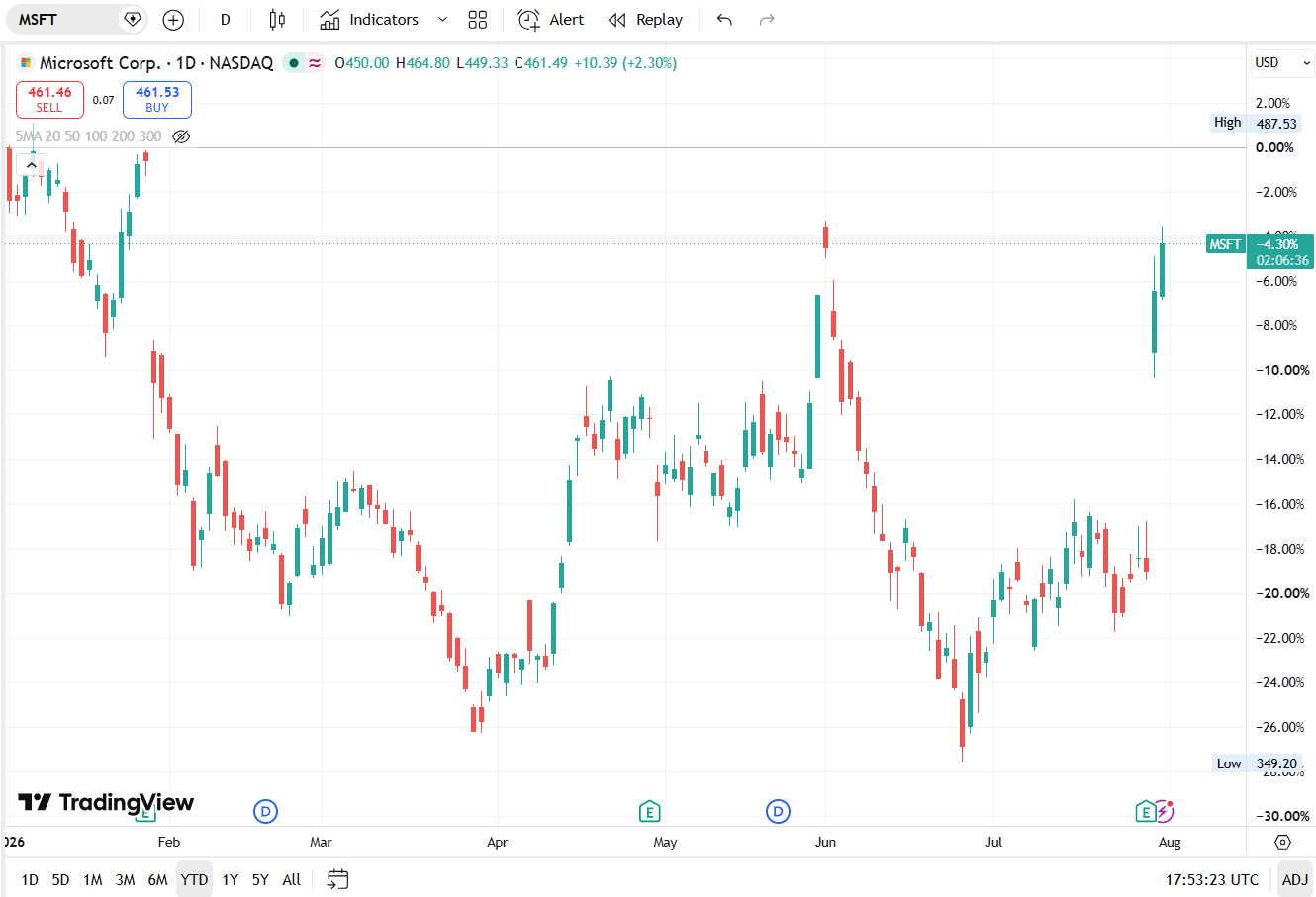
Despite the beat, Microsoft shares have actually been under pressure for much of 2026, down around 19% to 29% from record highs at various points this year, as investors weigh whether this spending will pay off fast enough. Gross margins have also narrowed to their lowest level since 2022, largely due to rising depreciation costs from all that new infrastructure. Free cash flow fell 23% in the most recent quarter as a result.
This is the central tension in the MSFT investment story right now.
Bulls see necessary investment to capture a massive AI market; skeptics worry the company is spending faster than it can prove a return.
Watch how Azure’s growth rate compares to the pace of capex growth, if cloud revenue growth keeps outrunning spending growth, that’s a good sign the investment is paying off.
4. Copilot (Microsoft’s AI Assistant) Is Gaining Real Commercial Traction
Microsoft’s AI push isn’t just about cloud infrastructure, it’s also about selling AI directly to customers through Copilot, its AI assistant embedded across Office, Windows, and other products.
The company disclosed more than 30 million paid seats for Microsoft 365 Copilot, up from over 20 million just a few months earlier, with hundreds of enterprise customers buying high-end bundles.
Separately, GitHub Copilot (the coding assistant) now has around 50 million users, and Microsoft’s overall AI business is running at an annualized revenue rate of roughly $37 billion, up 123% year-over-year.
This is the “proof” investors are looking for that AI spending translates into products people will actually pay for, not just infrastructure that sits idle. Seat growth and usage numbers like these are becoming as closely watched as Azure’s growth rate.
5. The Anthropic Investment Is Already Paying Off and New AI Products Are Rolling Out
Microsoft’s investment in AI lab Anthropic contributed a $3.2 billion gain to its most recent quarterly results, a reminder that Microsoft’s AI strategy extends beyond OpenAI to a broader portfolio of AI partnerships and investments.
On the product side, Microsoft also unveiled “Project Perception,” a new AI-powered cybersecurity initiative, as part of its push to embed AI capabilities across its enterprise offerings, while its Xbox gaming division took an impairment charge, a reminder that not every part of the business is thriving equally.
Microsoft’s strategy isn’t a single bet on one AI partner, it’s a diversified set of investments, products, and partnerships. That diversification can reduce risk, but it also means investors need to track performance across several moving pieces rather than one simple headline number.
The Bottom Line
Microsoft remains one of the most closely watched stocks in the market precisely because it sits at the center of the AI investment debate: strong, recurring core revenue funding an enormous, expensive bet on the future.
The next few quarters will likely hinge on one question, does Azure’s growth and Copilot’s adoption keep outpacing the eye-watering capital spending, or does the gap start to worry investors more than it already has?
Disclaimer: All information here is for educational purposes only. This is not financial advice. Please do your own research and speak with a licensed advisor before making any investment decisions. Past performance is not indicative of future returns. How we invest may not suit your investment goals and risk management profile.