

Dear Investor.
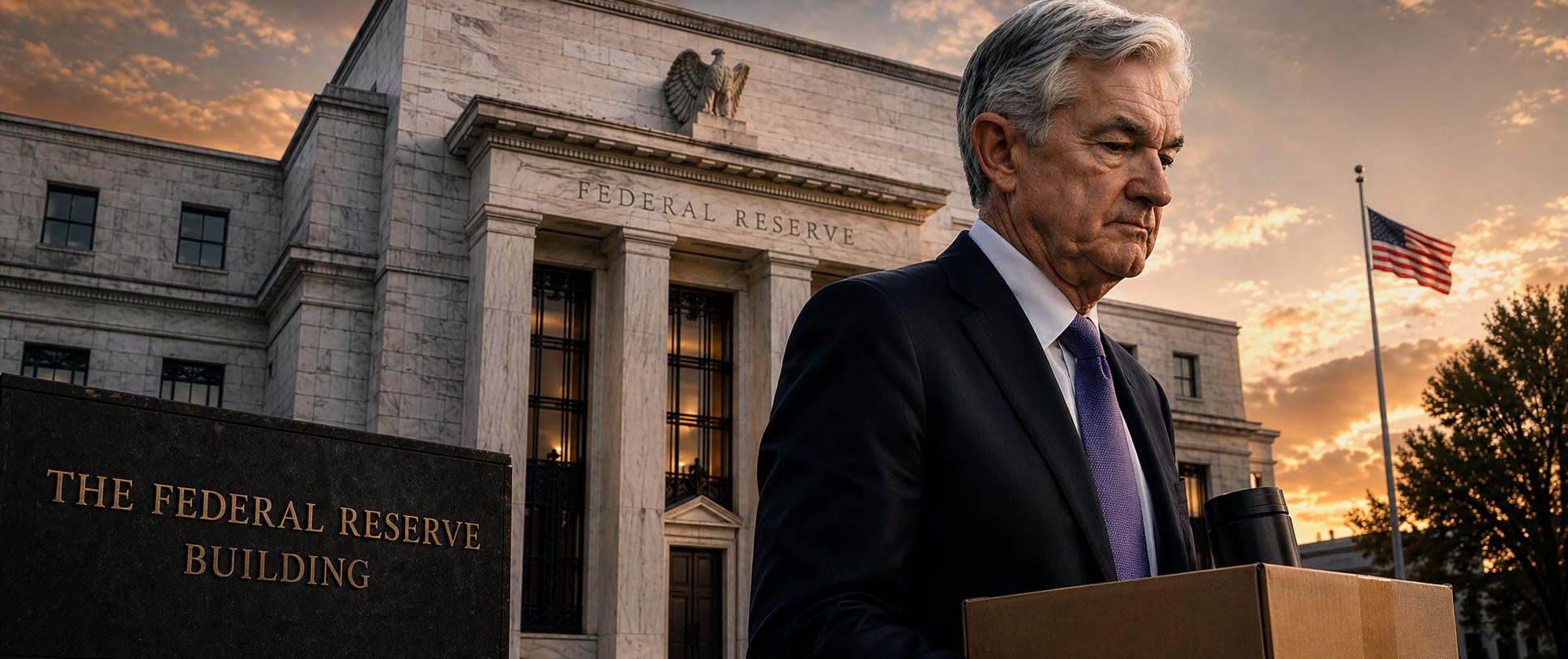
Zee here. The man who steered America’s economy through a pandemic, a rate crisis, and a war is handed over the keys yesterday, April 29th 2026.
Most people have never heard Jerome Powell speak. But every time they pay for groceries, take out a loan, or check their mortgage rate, his decisions are behind it.
Yesterday, after more than eight years steering America's economy through its wildest chapter in decades, Powell chairs his final meeting as Federal Reserve Chairman. This is the story of what he did, what it meant, and who takes over from here."
Join us on Wednesday 6 May 2026 (7:30-915pm SG Time), for our live Free webinar, where we cover:
* Our resilient investing strategy that we use in our public portfolio
* Stock Analysis: Will Visa be disrupted by AI?
Attendees will also get preview our new AI Powered Stock Market Simulator game where you’ll learn about your investing strengths and weakness.
👉🏼 Click here to reserve a spot. (LINK)
Who is Jerome Powell?
Jerome Powell is the Chairman of the Federal Reserve, which is America’s central bank. Think of him as the person in charge of the country’s economic thermostat. His main job?
Set interest rates to keep inflation low and people employed. When he raises rates, borrowing gets more expensive (slows the economy). When he cuts them, borrowing gets cheaper (stimulates growth). Since 2018, Powell has been the most powerful economic voice in the world.
Jerome Powell Timeline
2018 — Takes charge
Powell is confirmed as Fed Chair by Trump, replacing Janet Yellen. He was seen as a steady, pragmatic choice.
2020 — COVID crisis
The economy collapses almost overnight. Powell slashes rates to near zero and floods the system with emergency cash to prevent a depression.
2022 to 2023 — The great rate hike
Inflation hits a 40-year high. Powell triggers the fastest rate hike cycle in modern history, 11 hikes in a row, bringing rates to 5.25–5.5%. Critics called it too slow; others called it too fast. He held the line.
2024 to 2025 — Cutting begins
With inflation cooling, Powell pivots to cuts. But geopolitical turbulence, including the war in Iran — forces a cautious approach. Rates settle at 3.5–3.75%.
April 29, 2026 — Final press conference
Yesterday, Powell wraps up his final FOMC meeting as Chair and holds his last press conference as head of the world’s most important central bank.
What’s happening right now?
Yesterday night was a historic one. Powell is chairing his final Federal Open Market Committee (FOMC) meeting, the regular gathering where the Fed decides what to do with interest rates.
As expected, rates are being held steady at 3.5% to 3.75%. No cut, no hike.
The Fed is essentially pressing pause while it watches how the Iran conflict plays out, higher oil prices are pushing up inflation, which makes cutting rates risky right now.
Enter Kevin Warsh
Powell’s successor is Kevin Warsh, nominated by President Trump. Warsh is a well-known figure in financial circles, he served on the Federal Reserve Board during the 2008 global financial crisis as Ben Bernanke’s right-hand man, which earned him deep credibility on Wall Street.
The last hurdle to his confirmation, a Justice Department probe into Powell over a headquarters renovation, was cleared over the weekend.
With holdout Senator Thom Tillis now on board, Warsh is expected to be confirmed by the Senate Banking Committee today and officially takes over from Powell in May.
What to watch for next
1. Powell’s final words: Will he confirm whether he’ll stay on the Fed’s Board of Governors (his governor term runs until 2028)? Staying on could create tension with Warsh’s agenda.
2. Warsh’s direction: He’s expected to shake things up, possibly eliminating the Fed’s ‘dot plot’ forecasts and reducing press conferences.
3. Rate cuts in 2026? Markets only price in an estimated 20% chance of any cut by year-end. The Iran war makes the path forward murky.
Disclaimer:
All information here is for educational purposes only. This is not financial advice. Please do your own research and speak with a licensed advisor before making any investment decisions. Past performance is not indicative of future returns. How we invest may not suit your investment goals and risk management profile.