

Dear Investor.
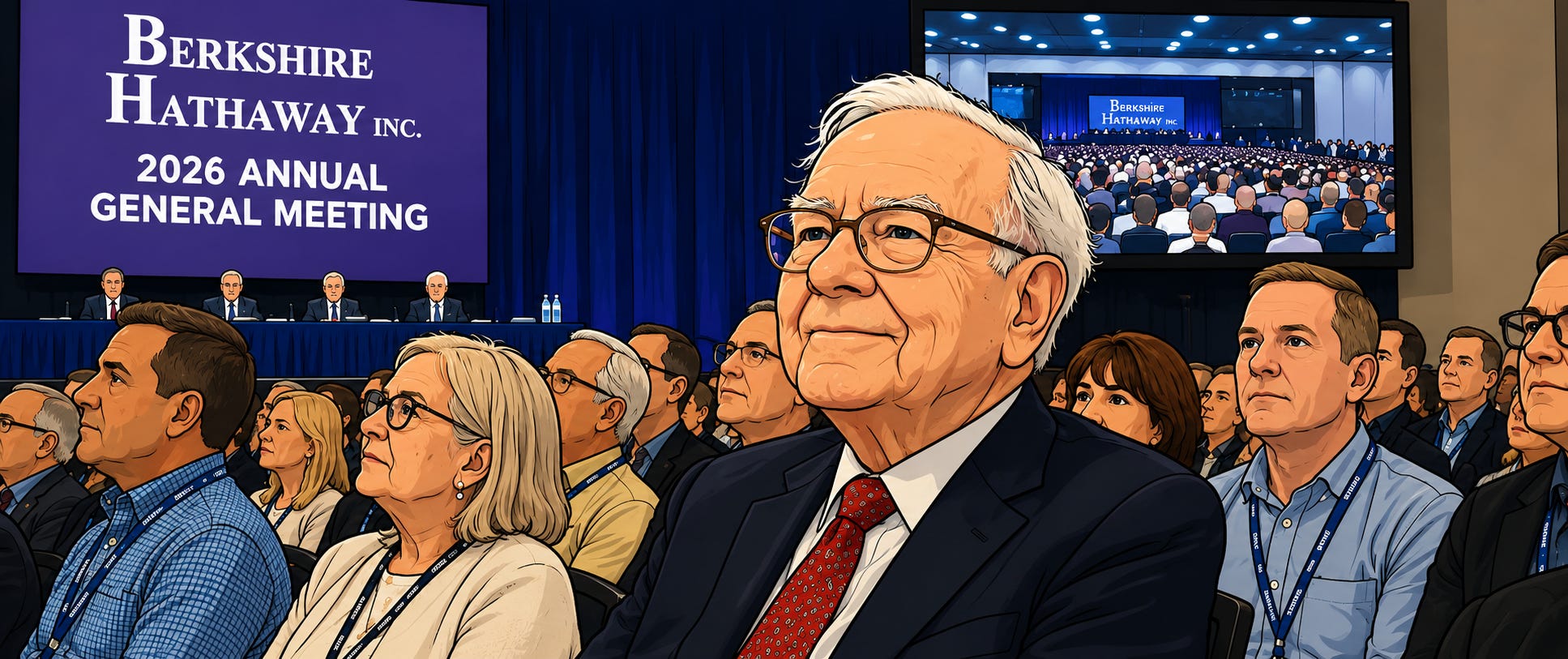
Zee here. For the first time in 60 years, Warren Buffett watched Berkshire Hathaway’s 2026 Annual General Meeting from the audience.
He didn’t chair the stage. He sat in the crowd.
It was a quiet, symbolic passing of the torch and yet, when he sat down with CNBC journalist Becky Quick afterward, everything he said felt as sharp as ever.
Here’s what stood out.
In case you missed the last one...
Join us on Monday 25 May 2026 (7:30-915pm SGT), for our live Free webinar, where we cover:
* Our resilient investing strategy that we use in our public portfolio
* Stock Analysis: Will Visa be disrupted by AI?
Attendees will also get preview our new AI Powered Stock Market Simulator game where you’ll learn about your investing strengths and weakness.
👉🏼 Click here to reserve a spot. (LINK)
“I’m Smart in Spots”
When asked to reflect on 60 years in business, Buffett was characteristically honest: only about five of those years were truly exceptional.
The rest? Just staying in his lane.
He referenced an old quote from Tom Watson Sr., the founder of IBM: “I’m smart in spots and I stay around those spots.”
That’s Buffett’s entire philosophy in one sentence. Not genius. Not luck. Just relentless discipline about what you know and the courage to do nothing when you don’t.
That discipline is what explains Berkshire’s eye-watering $380 billion cash pile.
It isn’t a prediction that markets will crash. It’s simply the result of not finding enough good things to buy.
When the bar is high, cash accumulates. Simple as that.
The Church with a Casino Attached
This was the line of the day. Buffett described today’s financial markets as “a church with a casino attached.”
Both have grown. But the casino? It’s gotten a lot more attractive lately.
His specific concern was same day options trading financial contracts that expire within 24 hours. He was careful about how he described it.
Not investing. Not even speculating. Gambling.
The instruments exist, the platforms are slick, and millions of people are pulling levers without fully understanding the odds stacked against them.
The church, the serious, long-term allocation of capital to real businesses is still there. But it’s harder to hear the sermon when the slot machines are so loud.
The Phones Go Quiet
So when does Buffett buy? His answer was almost poetic.
“The most likely time to buy things is when nobody else will answer their phones.”
The trading desks that boast endlessly about their capabilities and relationships, they go silent when markets seize up. The very moments that feel most terrifying are the ones when serious capital can be deployed at serious discounts.
The best opportunities don’t come from being clever.
They come from being willing to pick up the phone when everyone else has left the building.
Don’t Worry. Pay Attention.
On the topic of risk and fear, Buffett made a distinction worth writing down:
Worry does no good. Cognizance does.
The things that get openly discussed, the risks that fill newspaper headlines and conference panels, rarely become the crises people fear. Real damage comes from what nobody saw coming.
He pointed to Paul Samuelson’s economics textbook, a landmark work running nearly 900 pages. It contained no entry for zero interest rates, arguably the most consequential economic development of the past generation.
Nobody had it on their radar. That’s how risk actually works.
The Takeaway
Buffett’s message, stripped down, is this: the market has always had a gambling problem, but it’s getting worse. The antidote isn’t cleverness, it’s patience, self-awareness, and the willingness to act when others are paralyzed.
He’s 94. He sat in the audience instead of on the stage.
And somehow, in 25 minutes, he said more than most investors communicate in a lifetime.
The church is still open.
You just have to choose which door you walk through.
Disclaimer:
All information here is for educational purposes only. This is not financial advice. Please do your own research and speak with a licensed advisor before making any investment decisions. Past performance is not indicative of future returns. How we invest may not suit your investment goals and risk management profile.