

Dear Investors.
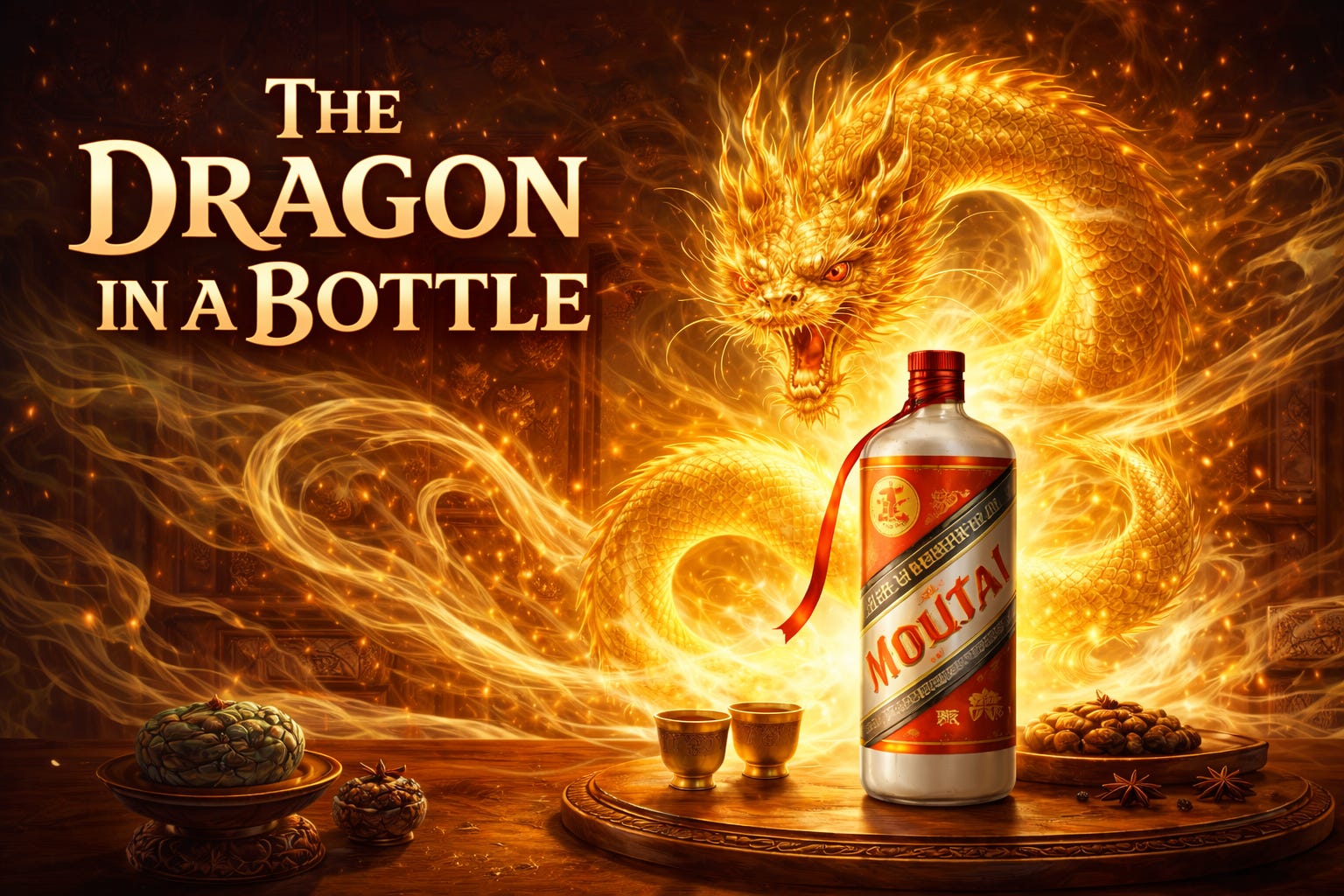
Zee here. Kweichou Moutai is like owning a piece of Chinese history and culture. It’s one of the world’s most valuable spirits companies, with incredible profit margins and a product that can’t be replicated.
However, it’s also facing real challenges from China’s economic slowdown, changing consumer habits, and the need to expand internationally. The recent price drops and the company’s efforts to innovate suggest this is a period of transition.
Either way, it’s a fascinating company to watch, because when a 2,000-year-old tradition meets modern market forces, the story is never boring.
What Is Kweichou Moutai, Anyway?
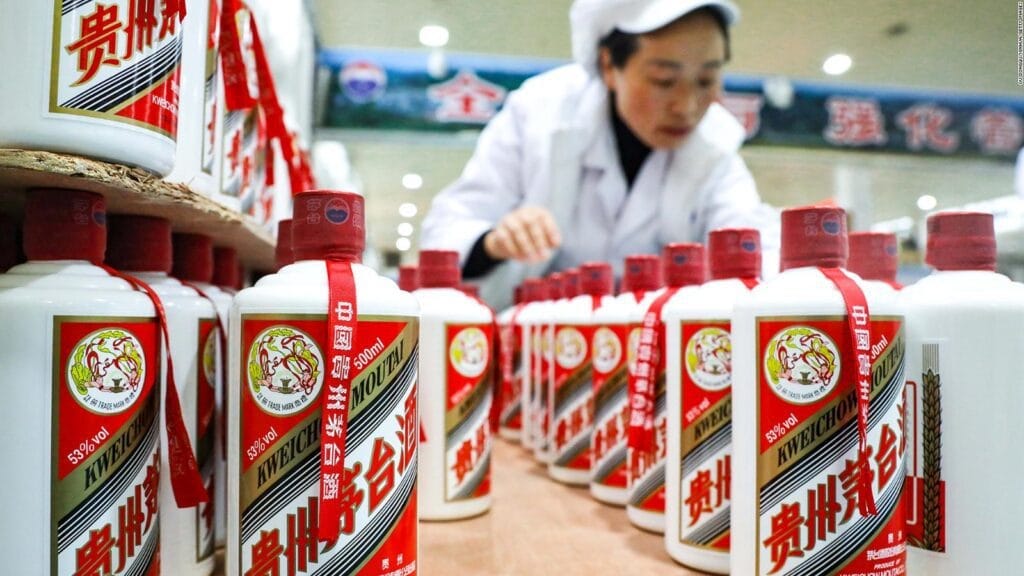
Before we dive into the latest news, let’s talk about what this company actually does. Imagine the most expensive, prestigious liquor brand in China, that’s Kweichou Moutai. They make “baijiu” (pronounced “bye-joe”), a powerful Chinese spirit that’s been around for centuries.
Think of it as China’s equivalent to French champagne or Scottish whisky, but with way more alcohol (up to 60%).
This isn’t just any liquor company. At its peak, Kweichou Moutai was worth more than $450 billion, making it more valuable than most Fortune 500 companies. As of early 2026, it’s still worth around $249 billion, which is roughly the size of companies like Nike or PepsiCo.
Ancient Roots, Modern Giant
The story starts in a small town called Maotai in Guizhou Province, where people have been making spirits since the 1600s. For hundreds of years, three small family distilleries: Chengyi, Ronghe, and Hengxing, perfected the art of making this unique liquor.
Fast forward to 1951: when the Communist Party came to power, they merged these distilleries into one state-owned company. In 1999, the company went public on the Shanghai Stock Exchange (that’s when regular people could buy shares), though the Chinese government still owns the majority.
Why Is It So Special?
Here’s the cool part: Moutai can only be made in one specific place. The unique climate, the local water from the Chishui River, and even the soil microbes in that valley create a flavor you literally cannot replicate anywhere else. It’s like how real champagne can only come from the Champagne region in France.

The production process takes five years from the time they start fermenting the sorghum (a grain) until the bottle is ready.
This isn’t mass-produced vodka.
Each bottle represents serious craftsmanship.
The 5 Latest Updates on Kweichou Moutai
1. Prices Are Falling
The flagship Feitian Moutai product has dropped to around 2,100 yuan (about $292), its lowest price in four years. To understand why this matters, you need to know that Moutai has long been more than just a drink, it’s been the go-to gift for business deals and government banquets.
What’s happening? China’s economy is slowing down, and people are cutting back on expensive business dinners and lavish gift-giving. When Moutai’s price drops, it’s seen as a sign that the overall business climate is cooling off. Think of it as a “luxury indicator” for China’s economy.
Even with falling prices, Moutai bottles still sell well above their official retail price of 1,499 yuan. The company is still incredibly profitable, but this trend shows it’s not immune to economic pressures.
2. The Company Is Still Making Money Hand Over Fist
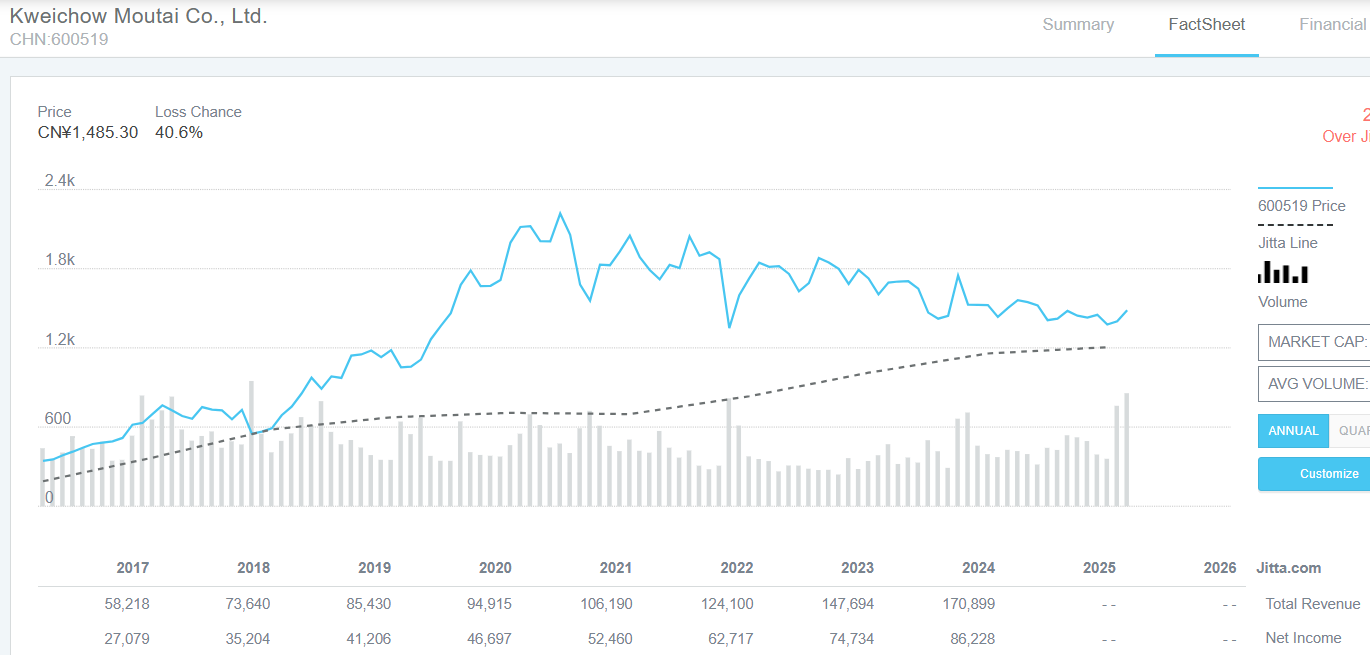
Despite the price pressure, Kweichou Moutai reported revenue of 170.9 billion yuan ($23.76 billion) in 2024, up 15.71% from the previous year, with net profit of 86.2 billion yuan ($11.99 billion), up 15.37%.
That’s more than 10 times the total export value of all wines from France’s famous Bordeaux region. The company employs over 40,000 people and maintains profit margins that most businesses can only dream of around 45-48%.
The company offers a dividend yield of approximately 3.65%, providing income alongside growth potential.
These metrics demonstrate exceptional profitability and efficient capital deployment, far outpacing most consumer goods companies globally. Even in tough times, Moutai is growing revenue and profits by double digits. That’s impressive resilience.
3. Going Global: Kweichou Moutai Partners with UK Retailer
In November 2025, Joybuy (part of China’s JD.com) became Moutai’s official online retailer in the UK, with plans to open a “Kweichow Moutai Cultural Experience Center” to introduce British consumers to baijiu.
For years, Moutai has been trying to expand beyond China. Unlike whisky or wine, baijiu is virtually unknown in Western markets. This partnership represents a serious push to build brand awareness internationally.
The global spirits market is huge, and if Moutai can capture even a tiny slice of international sales, it could unlock significant new revenue streams. They’re also sponsoring golf tournaments across Asia (including the Singapore Open) to build their brand globally.
4. Digital Sales Revolution in Progress
The company’s iMaotai app gained over 2.7 million new users in just nine days, according to Chairman Chen Hua. This is a major shift in how the company does business. New chairman Chen Hua announced the company would no longer use traditional distribution methods in 2026, moving more sales to direct-to-consumer channels.
This strategy could improve profit margins by cutting out middlemen and give the company better control over pricing. However, it may pressure traditional distributors and change the dynamics of the resale market.
Moutai’s 2026 Horse Zodiac Edition sold out in under a minute on the iMaotai app, then appeared on resale sites at premium prices. The company launched three limited Year-of-the-Horse editions priced between 1,899 and 3,789 yuan per bottle.
5. Trying to Win Over Younger Drinkers
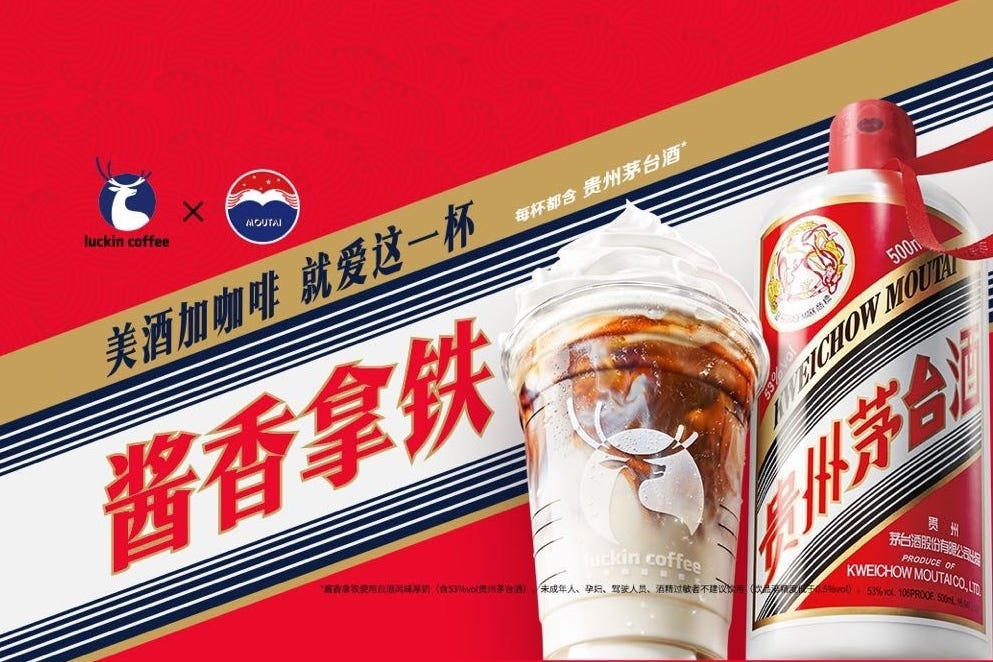
Traditional baijiu consumption has been declining as younger Chinese people drink less and prioritize health. So Moutai is getting creative. They’ve partnered with Luckin Coffee to create a Moutai-flavored latte, and they’ve launched lower-alcohol, fruit-flavored baijiu products in smaller, more affordable bottles.
Baijiu production is expected to fall for the eighth straight year in 2025. The company needs to adapt to changing consumer preferences or risk becoming irrelevant to the next generation.
The Bottom Line
The Bull Case (Why to Invest):
Brand moat: You literally cannot make real Moutai anywhere else. That’s a massive competitive advantage.
Profitability: Few companies maintain 45%+ profit margins year after year.
Cultural significance: Moutai is woven into Chinese culture and national identity. It was served when Nixon visited China in 1972!
Still growing: Despite challenges, revenue and profits grew 15%+ in 2024.
The Bear Case (Why to Be Cautious):
Economic headwinds: China’s slowing economy directly impacts luxury spending.
Changing culture: Anti-corruption campaigns and younger consumers preferring healthier lifestyles hurt demand.
Government control: The state owns the majority of shares, which can create unpredictability.
Limited international presence: For now, it’s overwhelmingly dependent on the Chinese market (97.5% of sales).
All information here is for educational purposes only. This is not financial advice. Please do your own research and speak with a licensed advisor before making any investment decisions. Past performance is not indicative of future returns. How we invest may not suit your investment goals and risk management profile.