

Dear Investor.
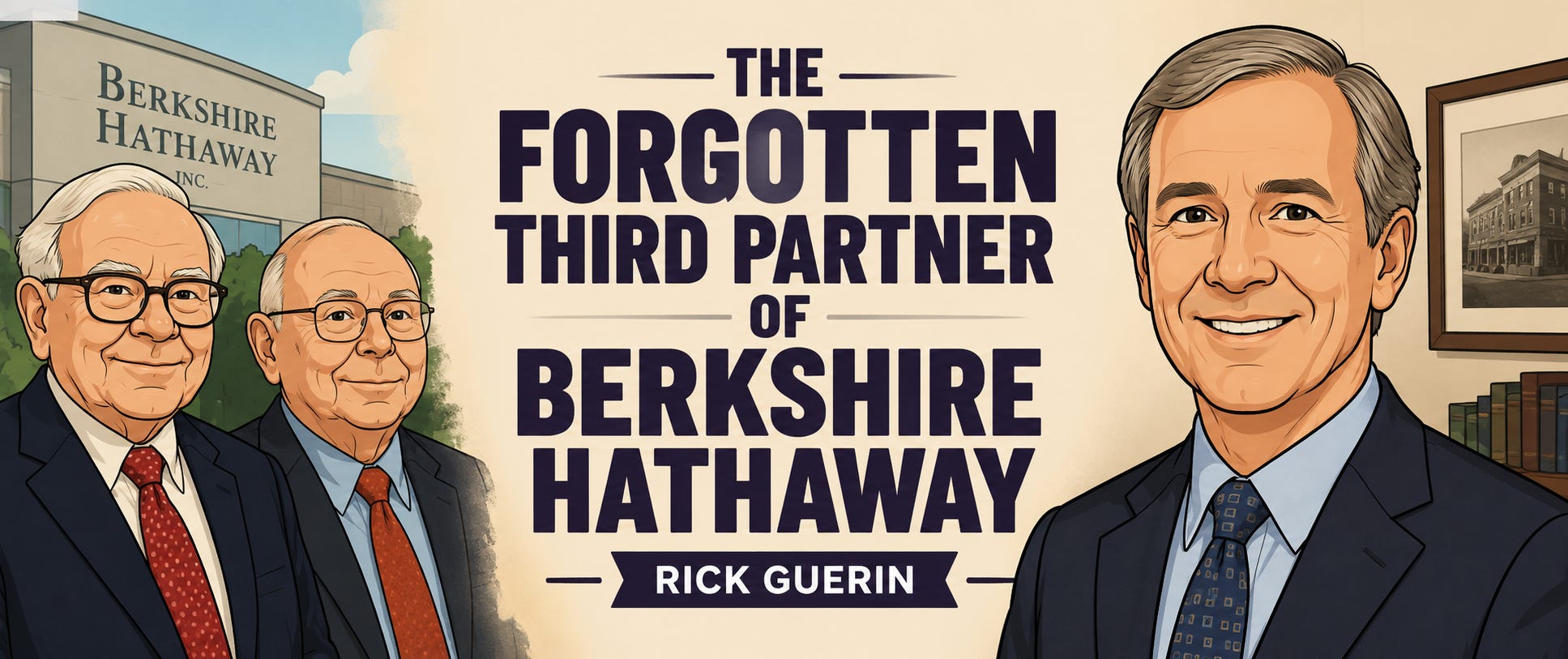
Zee here. Most investors can name the two men behind Berkshire Hathaway: Warren Buffett, the calm and folksy “Oracle of Omaha,” and Charlie Munger, the sharp-tongued philosopher who sat beside him for decades. Their story is legendary: patient compounding, iron discipline, generational wealth.
But there was a third man. Just as brilliant. Just as well-positioned. And almost completely forgotten.
His name was Rick Guerin. And the reason he vanished from the Berkshire story isn’t a mystery.
It’s a warning.
The Three Amigos of Early Investing
Back in the 1960s and 1970s, Warren Buffett, Charlie Munger, and Rick Guerin ran in the same intellectual circles. They analysed businesses together, shared ideas, and spotted undervalued opportunities in the market. By all accounts, Rick was every bit as sharp as his two famous friends.
All three were on a trajectory toward extraordinary wealth.
Then Rick disappeared from the story entirely.
Years later, famed investor Mohnish Pabrai sat down with Warren Buffett and asked the question that had been nagging at him:
“Whatever happened to Rick Guerin?”
Buffett’s answer is worth writing on a sticky note and putting on your monitor:
“Charlie and I always knew that we would become incredibly wealthy. We were not in a hurry to get wealthy; we knew it would happen. Rick was just as smart as us, but he was in a hurry.”
That single sentence contains a lifetime of financial wisdom.
But to truly understand what it means, you need to know what happened to Rick and why the same trap is swallowing investors today.
What Went Wrong: The 1973–1974 Crash and the Margin Trap
The early 1970s were brutal for markets. Between 1973 and 1974, the U.S. stock market plummeted nearly 70%. Companies that had seemed rock-solid saw their share prices collapse. It was one of the worst bear markets in modern history.
Rick Guerin had been using margin loans (borrowed money) to amplify his investment returns. When the market was rising, this strategy looked brilliant. But when the crash hit, the borrowed money became a trap.
To understand why, we need to briefly explain how margin works and why it is so dangerous.
What Is Margin?
Margin investing means borrowing money from your broker to buy more shares than you could with your own cash alone.
In good times, it supercharges your gains.
In bad times, it supercharges your losses and can wipe you out entirely.
Here is a simple example:
Say you have $10,000 and you want to buy shares in a company at $100 each. Without margin, you buy 100 shares.
With 50% margin, your broker lends you another $10,000, and you buy 200 shares instead.
When the stock rises 20% to $120:
Your 200 shares are worth $24,000
Subtract the $10,000 loan → your equity is $14,000
That’s a +40% return on your original $10,000, double what you’d have made without borrowing
This is the part that gets people hooked.
But when the stock falls 20% to $80:
Your 200 shares are worth $16,000
Subtract the $10,000 loan → your equity is $6,000
That’s a -40% loss on your original $10,000, again double the damage
And here’s where it gets truly dangerous. If the stock falls far enough, in this example, about 33%, your broker will issue what’s called a margin call. This is a demand to deposit more cash into your account immediately to cover your shrinking equity.
If you can’t meet the margin call in time, the broker forcibly sells your shares at whatever price is available. You don’t get a say. You don’t get to wait for a recovery.
Some brokers don’t even warn you first, they simply auto-liquidate your position the moment you breach the minimum threshold.
And here’s the truly catastrophic part: if the forced sale doesn’t fully cover what you borrowed, you still owe the broker the difference.
You can end up with zero shares and a debt.
This is how investors go bankrupt, not from bad stock picks, but from borrowed money turning a recoverable loss into a total wipeout.
Rick’s Reckoning
This is exactly what happened to Rick Guerin in 1973–1974.
When the market crashed nearly 70%, Rick’s margin loans triggered margin calls he couldn’t meet. He was cornered. To stay afloat, he was forced to sell his most prized asset, his Berkshire Hathaway shares, to Warren Buffett at under $40 per share.
Today, a single Berkshire Hathaway Class A share trades at over $700,000.
Rick didn’t lose his wealth because he was foolish or ignorant. He lost it because he was in a hurry and borrowed money to speed up the journey. When the inevitable rough patch arrived, the borrowed money gave him no room to breathe, no ability to wait, no choice at all.
Warren and Charlie, who carried no margin debt, simply sat on their hands and waited.
The storm passed.
Their shares recovered.
And they compounded their wealth patiently for the next five decades.
The Lesson That Every Investor Needs to Hear
This story isn’t just history. The same drama plays out in markets around the world today.
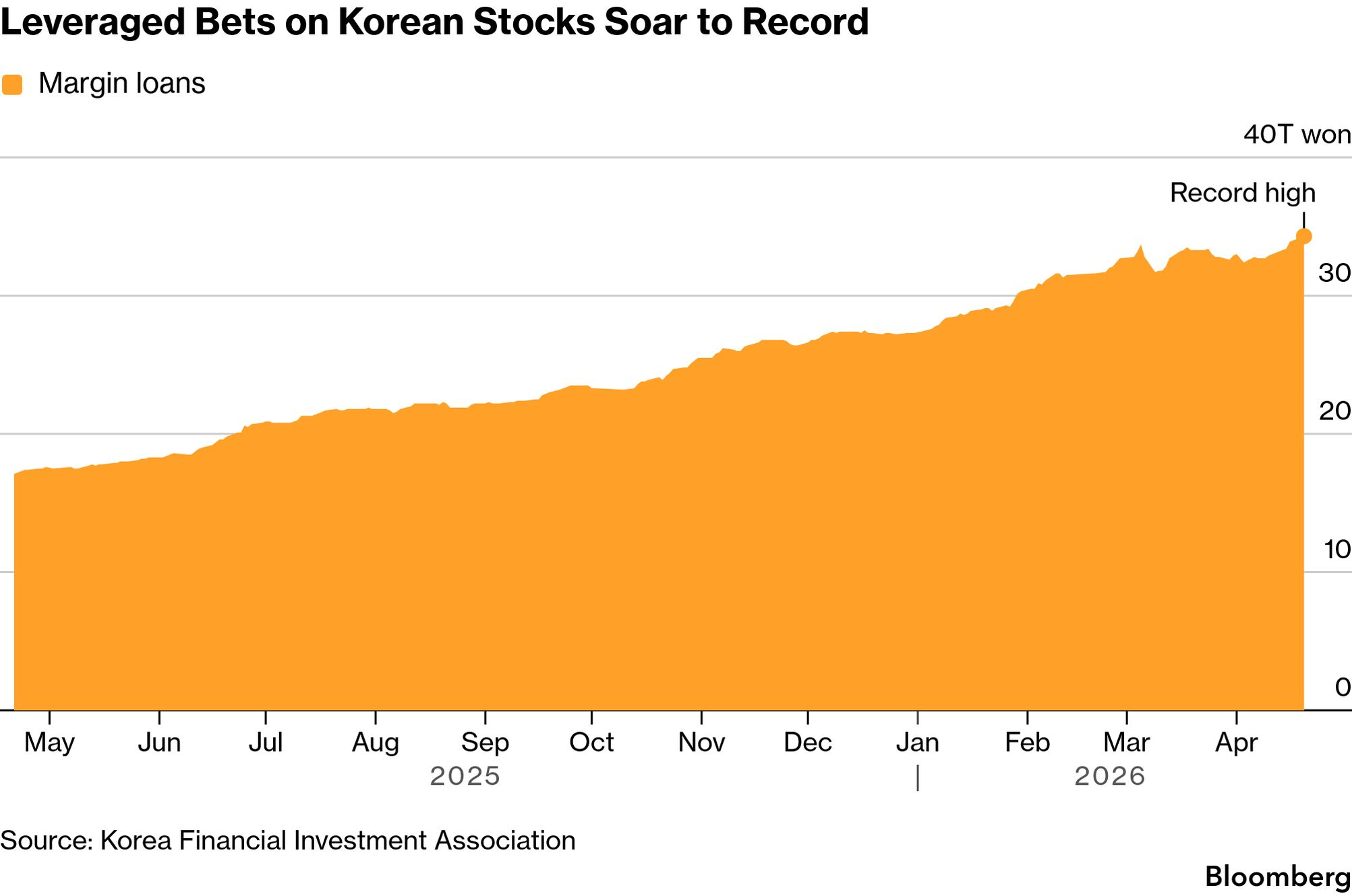
In 2026, record levels of margin debt have been flooding into surging South Korean memory chip stocks, with retail investors, including retirees, borrowing money at 150% margin to chase a rally already well underway.
When a market that has risen sharply meets a cyclical downturn. Memory chip markets have historically seen 50–60% drawdowns.
Those leveraged investors won’t just lose money. Many will be wiped out and still owe their brokers.
The pattern is always the same: markets rise, people get greedy, borrowed money flows in, and when the inevitable correction comes, the leveraged investors are forced to sell at the worst possible moment, exactly when they should be holding or even buying more.
The Two Lesson from Rick
Rick Guerin’s story leads to two simple but powerful investing rules:
1. Don’t short-sell. A stock can theoretically rise forever, creating unlimited losses for those on the wrong side of the bet.
2. Don’t buy on margin. Borrowed money removes your most powerful investing tool: the ability to wait. Without that, even the right investment at the wrong time can end your portfolio permanently.
Warren Buffett and Charlie Munger understood something that Rick Guerin and countless investors since learned the hard way: the market will always give you opportunities, but only if you survive long enough to take them.
Patience Is the Real Edge
There’s a reason wealth-building feels slow and boring when done correctly. Compounding takes time. The best investments often look uneventful for years before they explode in value. The difference wasn’t intelligence.
Berkshire Hathaway shares were available under $40 in the early 1970s. Today they’re worth more than $700,000 each. The entire gain was available to anyone who simply bought and waited, no leverage needed, no margin required, no hurry.
Rick Guerin had access to all of that.
He just couldn’t wait.
Warren Buffett once said the stock market is a device for transferring wealth from the impatient to the patient. Rick Guerin transferred his Berkshire shares to one of the most patient investors alive, at $40 apiece.
Don’t be Rick.
Disclaimer:
All information here is for educational purposes only. This is not financial advice. Please do your own research and speak with a licensed advisor before making any investment decisions. Past performance is not indicative of future returns. How we invest may not suit your investment goals and risk management profile..