

Dear Investors.
Zee here. If you've ever wondered what makes a defense contractor "recession-proof," Lockheed Martin's latest earnings report is a good place to start.
The world's largest defense company just posted double-digit sales growth, a record $230 billion backlog, and guidance upgrades across the board and the stock rallied on the news.
Defense investing isn't comfortable for everyone, and it shouldn't be. But my job here is to read what's actually happening in the numbers, not what I wish were happening.
Today, we break down what Lockheed does and why I think this trend still has room to run.
What Does Lockheed Martin Actually Do?
Before diving into the numbers, it helps to know what you’re actually investing in. Lockheed Martin (NYSE: LMT) is the largest defense contractor in the world.
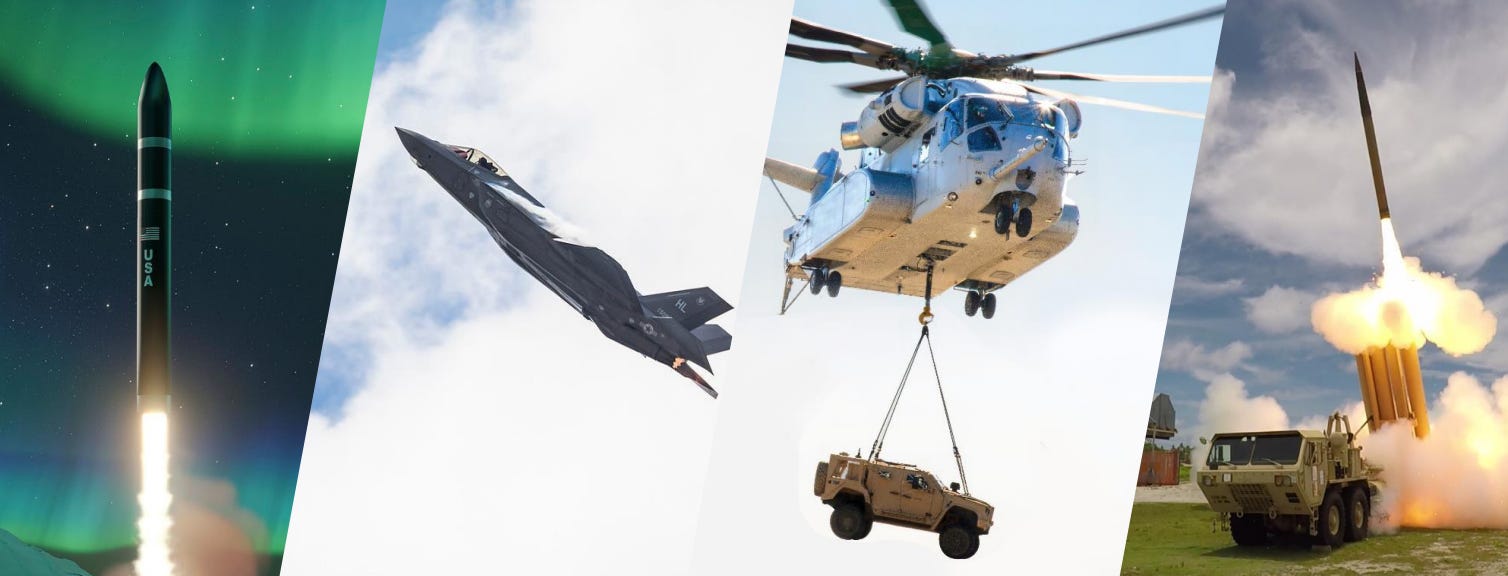
It designs, builds, and services fighter jets (like the F-35), missiles and missile defense systems, helicopters, satellites, and other military technology , mostly for the U.S. government, but also for allied nations abroad.
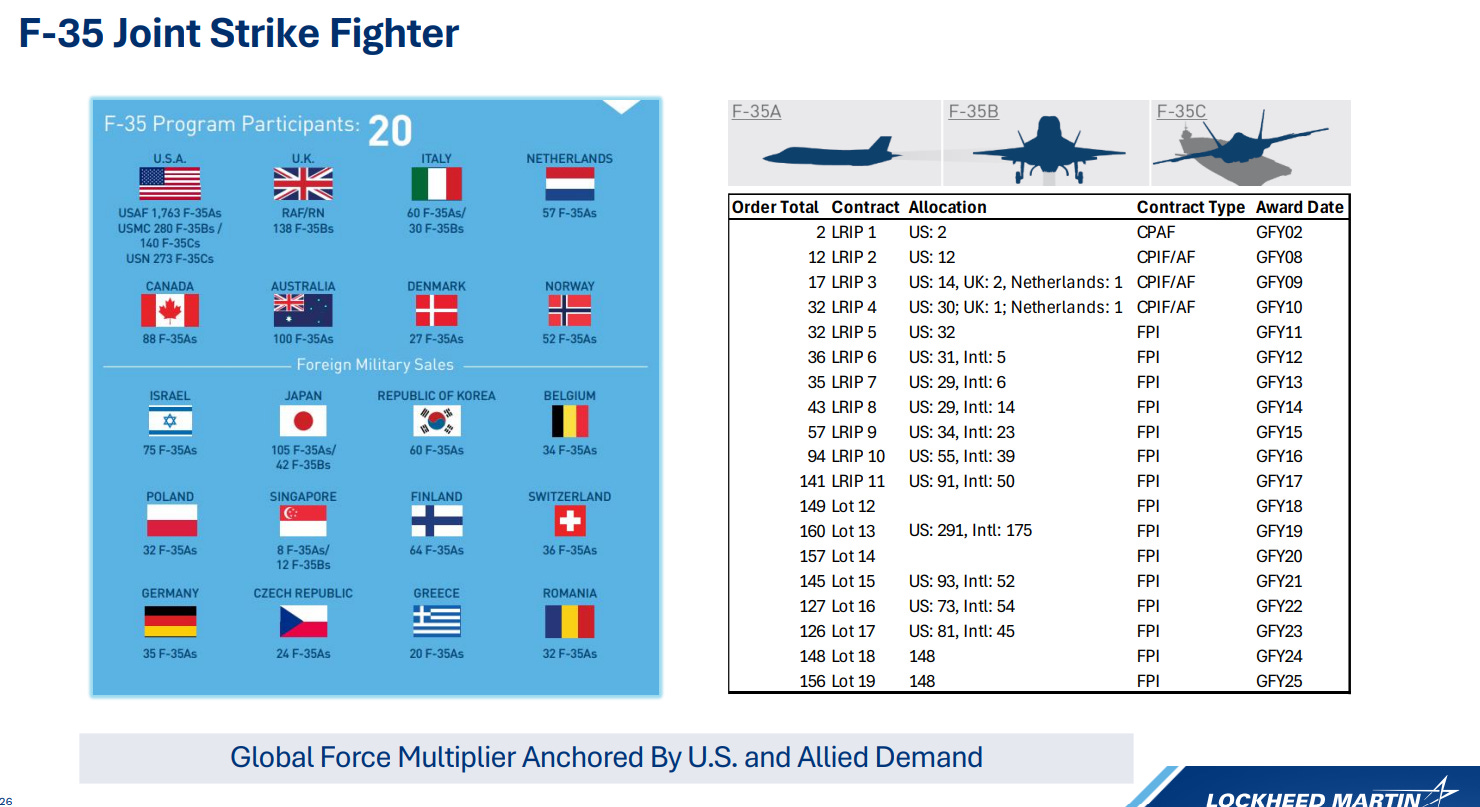
Its business model is fairly simple, even if the hardware is not: Lockheed signs long-term contracts with governments, often worth billions of dollars and spanning years or even decades. This gives the company unusually predictable, recurring revenue compared to most industrial companies.
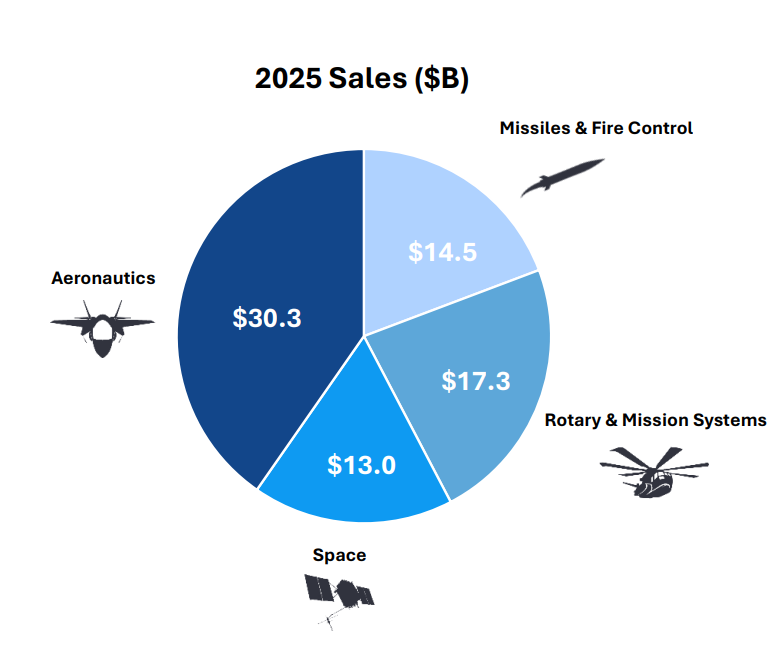
Its four main segments are Aeronautics (jets), Missiles and Fire Control, Rotary and Mission Systems (helicopters and undersea systems), and Space. Because defense spending tends to be sticky, governments don’t cancel military programs on a whim. Lockheed is often viewed as a “defensive” stock in both senses of the word.
1. Sales Jumped 11% to Just Over $20 Billion
Lockheed’s second-quarter revenue came in at $20.1 billion, up from $18.2 billion a year earlier.
Growth was broad-based, with higher volumes across nearly every segment, including a ramp-up in missile production and stronger performance in its jet and helicopter businesses.
2. Profits Look Like They Exploded — But Read the Fine Print
Net earnings jumped to $1.8 billion (or $7.94 per share), compared to just $342 million ($1.46 per share) a year ago.
That’s a dramatic swing, but it’s worth understanding why: last year’s quarter was dragged down by $1.6 billion in one-time program losses tied to a classified Aeronautics contract and two troubled helicopter programs.
This year didn’t repeat those losses, which flatters the comparison. That said, there was also genuine underlying growth, particularly from higher F-35 production and missile programs.
3. Full-Year Guidance Just Got Raised
Lockheed now expects full-year sales of roughly $79.75 billion to $81.75 billion, up from its previous range.
It also raised its earnings-per-share guidance and now expects free cash flow above $7 billion for the year. Raising guidance mid-year is generally a signal that management is confident the momentum will hold.
4. The Backlog Hit an All-Time Record: $230 Billion
This might be the single most important number in the report.
Lockheed’s order backlog, essentially the pipeline of future work it’s already been contracted to deliver, climbed to a record $230 billion, boosted by $65 billion in new orders this quarter, including a $35 billion THAAD missile defense contract.
A backlog this size gives investors real visibility into revenue years down the road, which is part of why defense stocks are prized for stability.
5. The Stock Popped More Than 5%, and Lockheed Is Also Expanding
Shares jumped over 5% to around $541 following the report. On top of the earnings beat, Lockheed is also in the process of acquiring Ultra Maritime for $3.45 billion, a deal that would bulk up its undersea and anti-submarine warfare capabilities.
That acquisition is still pending regulatory approval and isn’t yet baked into the company’s guidance.
The Bottom Line
Some investors called defense a winner sector the moment this conflict restarted, and this quarter is a good example of why. War is horrible, and I never celebrate that. But as an investor, my job is to read what’s actually happening in the financials, not what I wish were happening.
Governments generally don’t cut defense budgets in the middle of a live conflict, and Lockheed’s record backlog is strong evidence that demand isn’t disappearing next quarter.
With much of the U.S. missile arsenal reportedly depleted during the conflict, I’d expect a meaningful restocking cycle once things settle and that’s a tailwind that could extend well beyond this earnings report.
Disclaimer: All information here is for educational purposes only. This is not financial advice. Please do your own research and speak with a licensed advisor before making any investment decisions. Past performance is not indicative of future returns. How we invest may not suit your investment goals and risk management profile.